Some houses ask for an extension. Others ask for a rethink. For the owners of Bundara Street House in Fitzroy North, the issue was never a lack of space. The house was already generous in size. What it lacked was balance: too much area was given over to rooms that did little for daily life, and not enough thought had been given to the spaces where a family can comfortably spend its time.
For Liisa and John, who live here with their two children, those frustrations had become clear over several years of living in the house. They knew what was not working. They wanted better places to gather, to work, and for the children to be able spread out. They wanted more light, more usability, and a stronger connection to the outdoors. Most of all, they wanted the house to feel like it belonged to the way they live, rather than to a sequence of past renovations by previous owners.
What followed was not an exercise in adding more, but in making better use of what was already there. The design focused on reordering the house, clarifying its priorities, and turning a compromised plan into one that feels calm, open and generous.
Bundara Street House
Location: Fitzroy North, VIC
Building Type: Residential Renovation
Photographer: Rory Gardiner
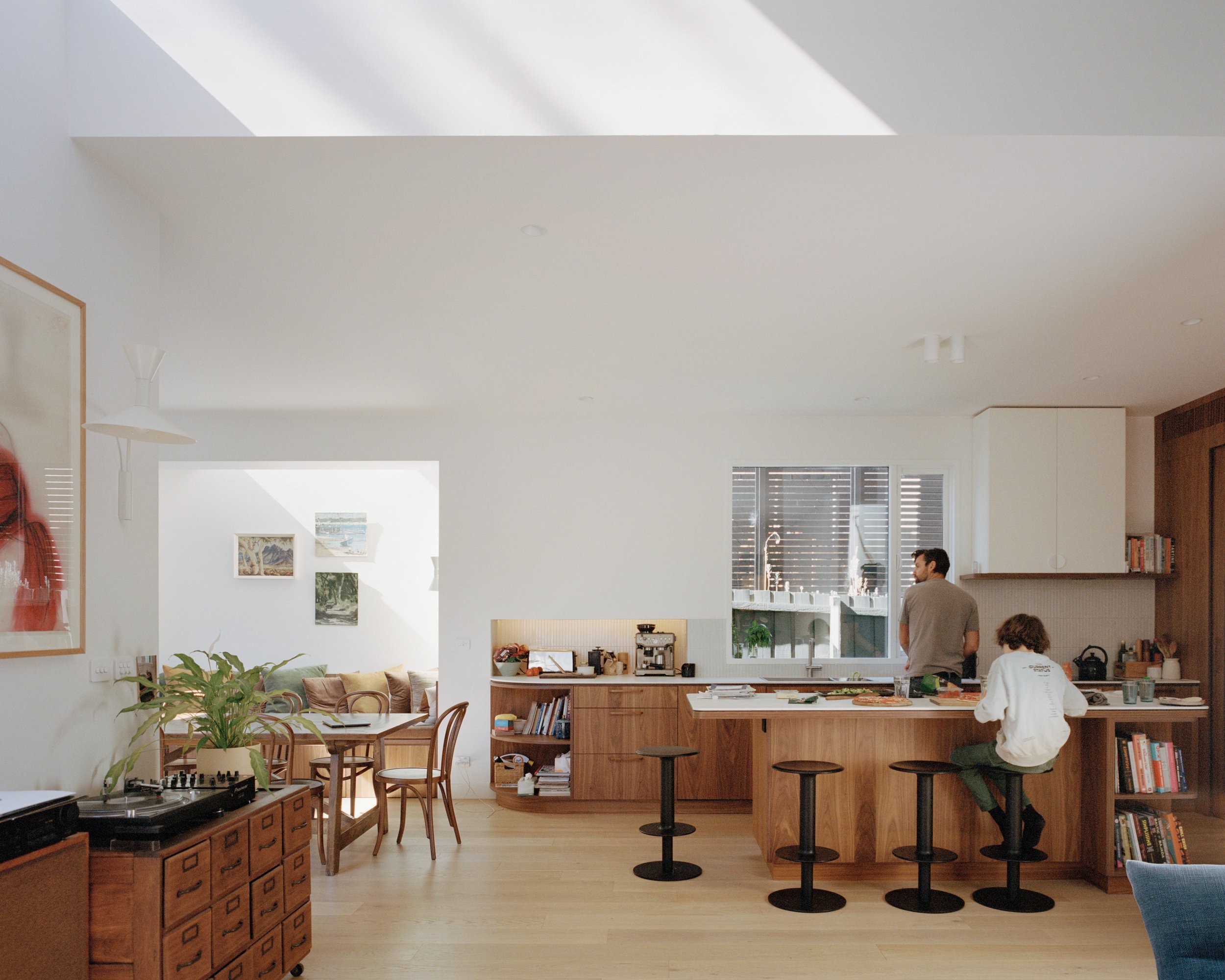
The new kitchen, dining and living areas awash with light from openings above.
A house with good bones, but the wrong priorities
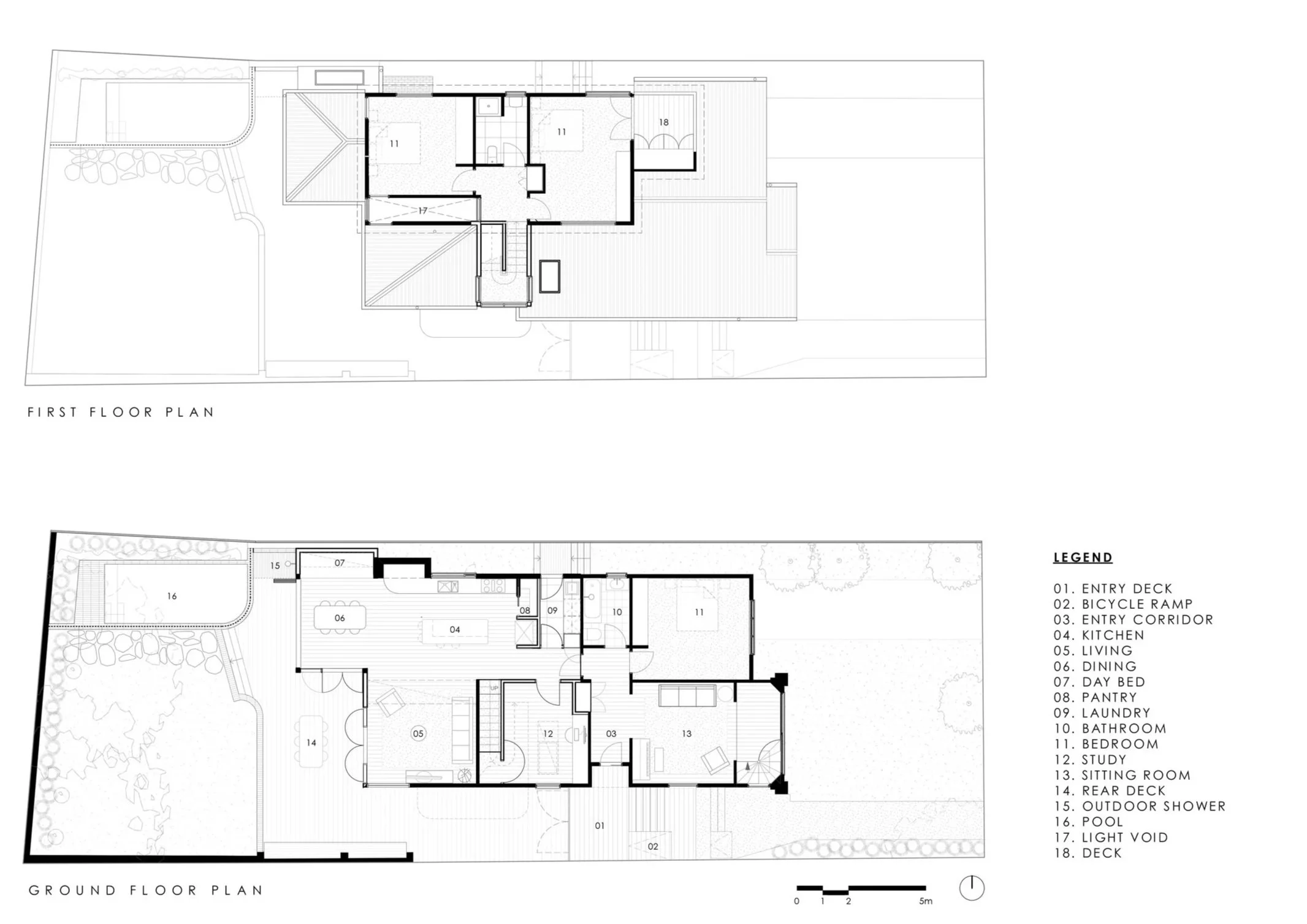
From the street, the original house has a nostalgic charm. The California Bungalow sits comfortably within the Fitzroy North streetscape. But once inside, the interior told a different story. A previous renovation had added an upper level without properly responding to the realities of the site. The block rises steeply from the street towards the rear, and the earlier works had largely ignored that topography. The stair was awkwardly positioned off the dining area at the back of the house, the main living room sat buried in the middle of the plan, and access to the garden felt more like an afterthought.
At the same time, a large apartment buildings had risen on two sides of the property to the north and west, creating a sense of visual bulk. The challenge was to reorganise the house in a way that improved family life, brought in light, and turned attention away from the surrounding apartment walls.
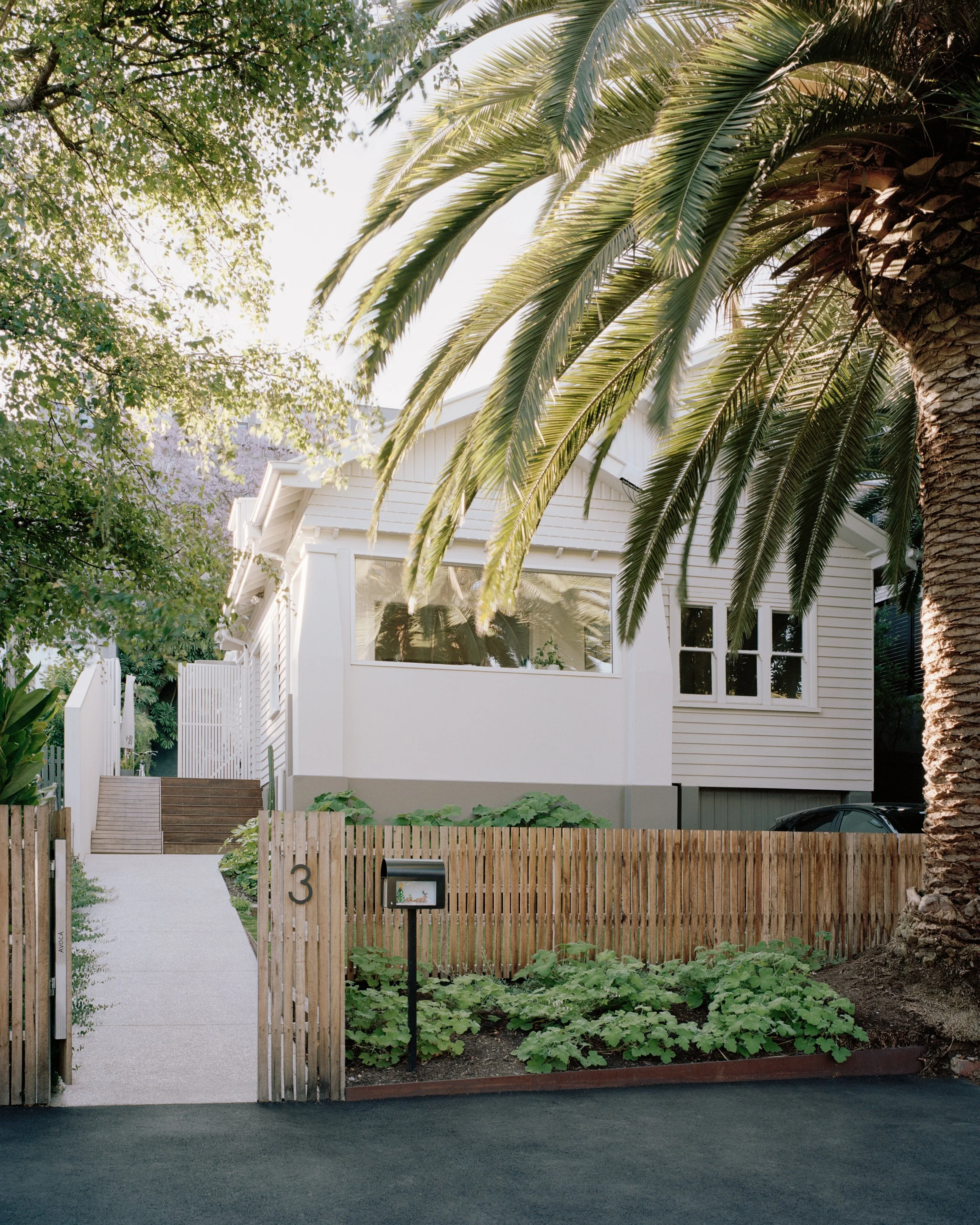
The retained and refreshed front of the house with new fencing and bike access paths down the side of the house.
Designing around family life
Liisa and John were relatively new owners, but after a few years living in the house were very aware of what was not working. They knew how poorly the kitchen and living spaces functioned. They needed a proper study space for working from home, along with somewhere the children could do homework and activities. They wanted as much outdoor living space as possible and plenty more daylight brought into the house.
They also approached us with a strong vision for the feel of the home. John imagined a house that could open up easily to the elements, a place where doors might stay wide open through most of the year and daily life could spill outside. Liisa brought another reference point: her Estonian background, and images of Estonian farmhouses and summer houses that suggested simplicity, warmth, timber and light. Those references lead to the aim of creating spaces that felt airy, pared back and grounded in natural materials; a home that could act as a kind of oasis despite its encroaching urban surroundings.
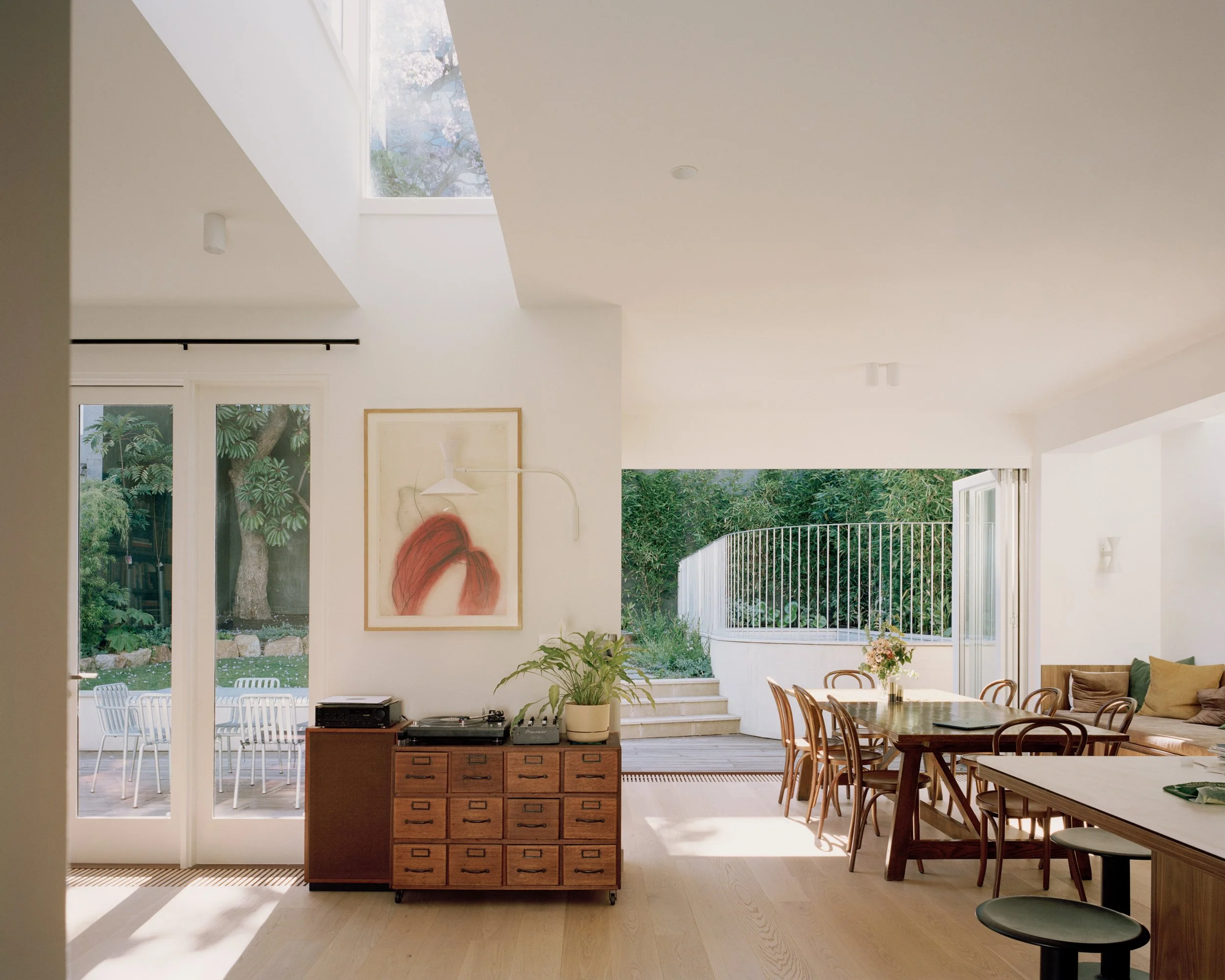
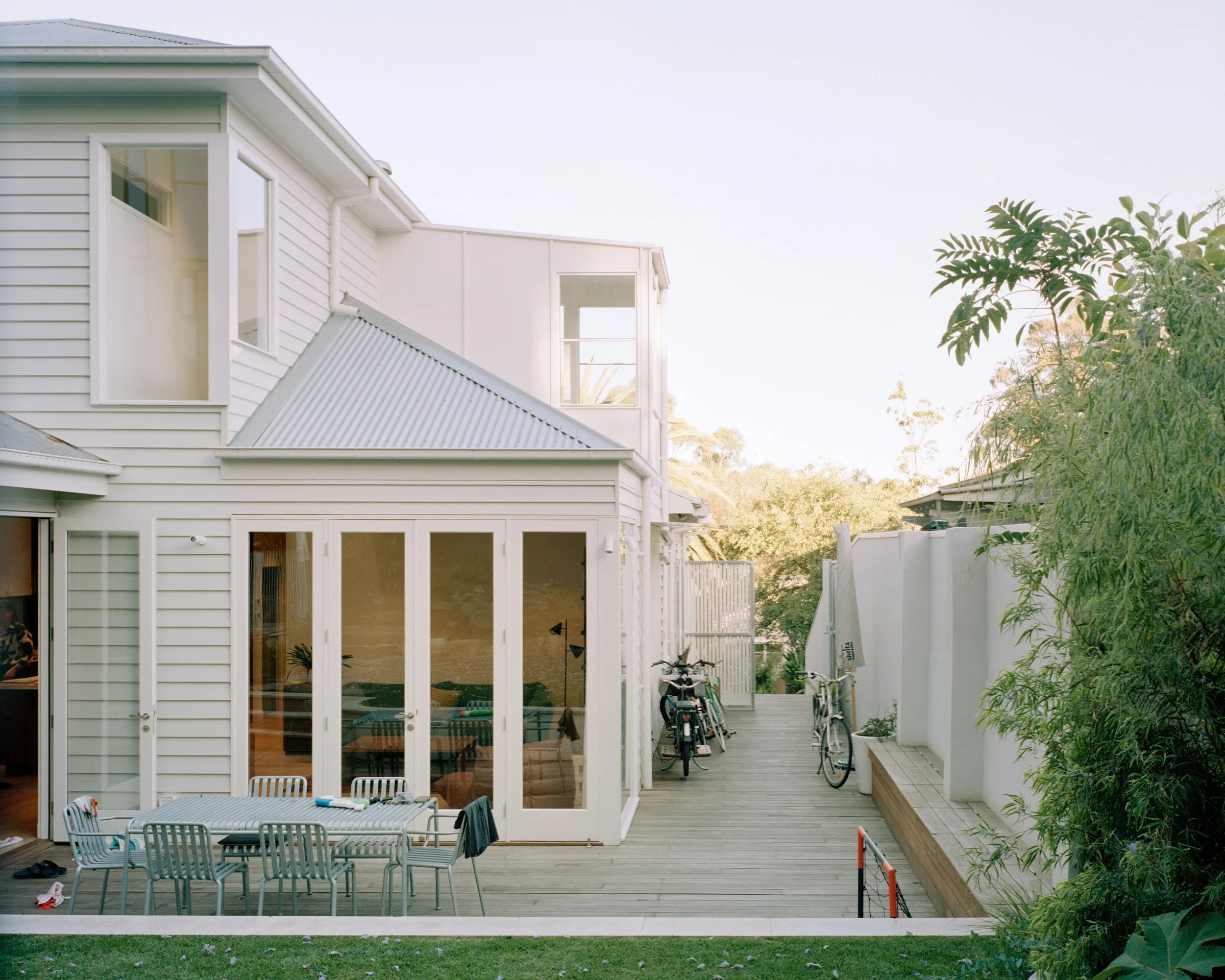
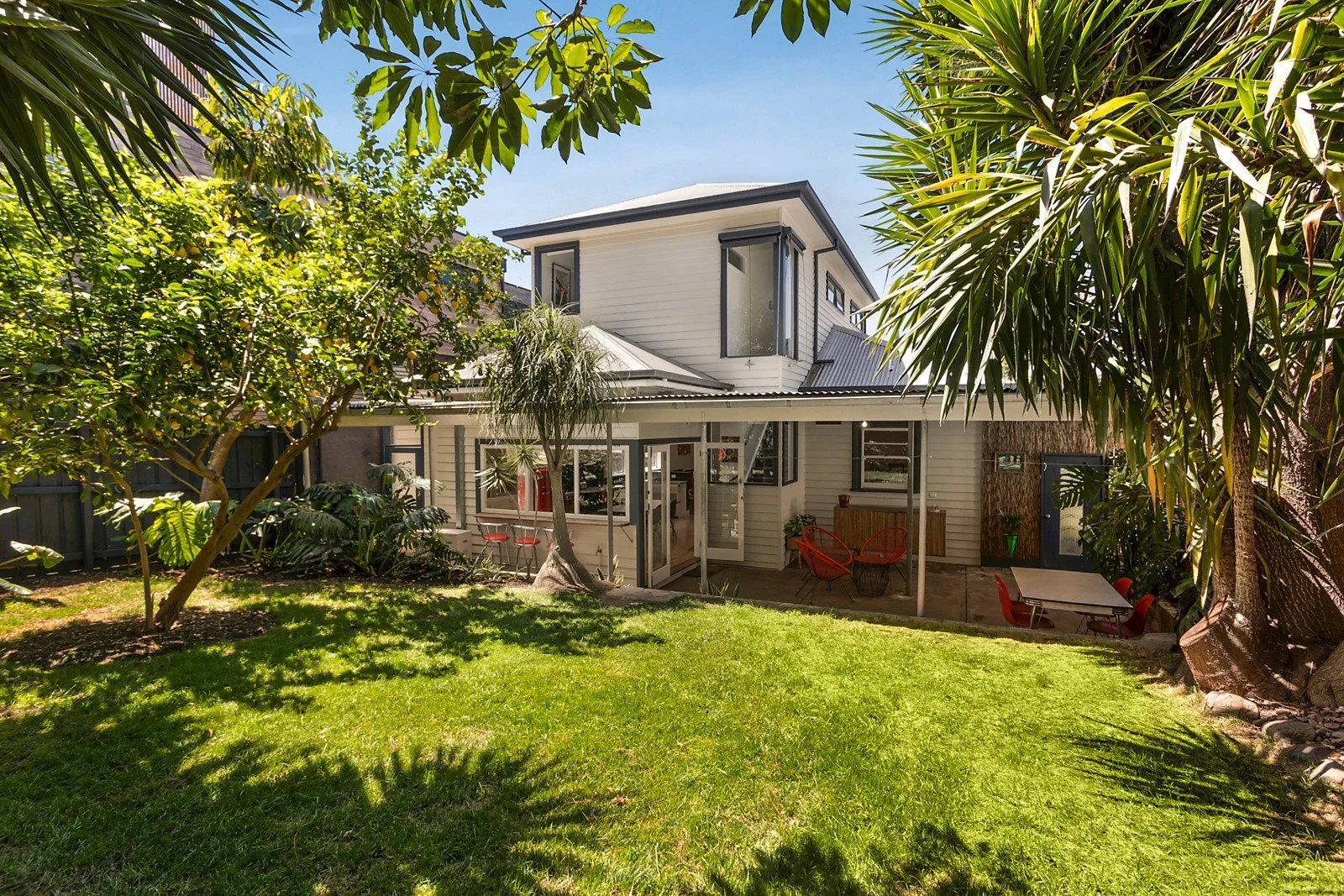
The combined living spaces located at the rear of the house, opening to the reworked backyard.
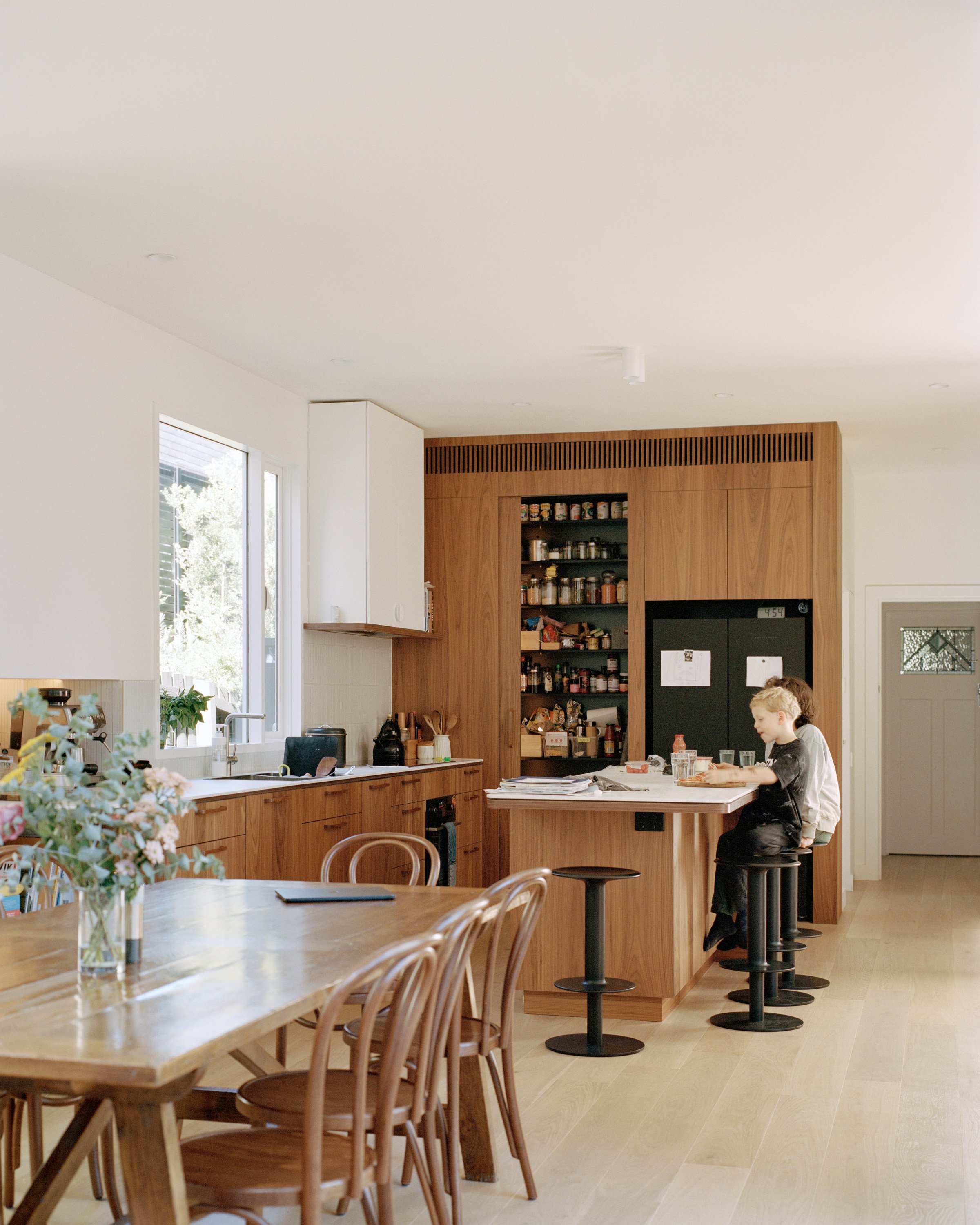
A new approach to the plan
From the initial stages of the project, it was clear that there was no need for a major addition. The task was to work within the existing envelope and make it perform better. The key decision identified that would correct the whole ground floor, was relocating the stair.
Once the stair was shifted to a more logical position, the plan could be completely rethought. It allowed floor area to be reclaimed, rooms to be reassigned, and the main living spaces to be moved to the rear of the house to connect directly to the garden.
The result is a house with far greater choice in how it can be used. There is now a shared open living zone, a separate sitting room, breakout spaces for work and play, and a reclaimed basement room that can function as a music room or additional retreat. The family can come together or spread out as needed. That flexibility is often what makes a house feel generous, and it was achieved here without increasing the building footprint.
Liisa and John’s kids sitting in the new kitchen.
A new relationship to the outdoors
The new living spaces that open to the backyard, create a much stronger connection between inside and out. This was critical not only for the family's lifestyle, but also for the broader experience of the house.
Rather than fighting the site's limitations, the project works with them, using vertical light and carefully framed outlooks to shift attention away from the neighbouring bulk. Light is drawn deep into the plan through skylights, as well as the repurposed stair void.
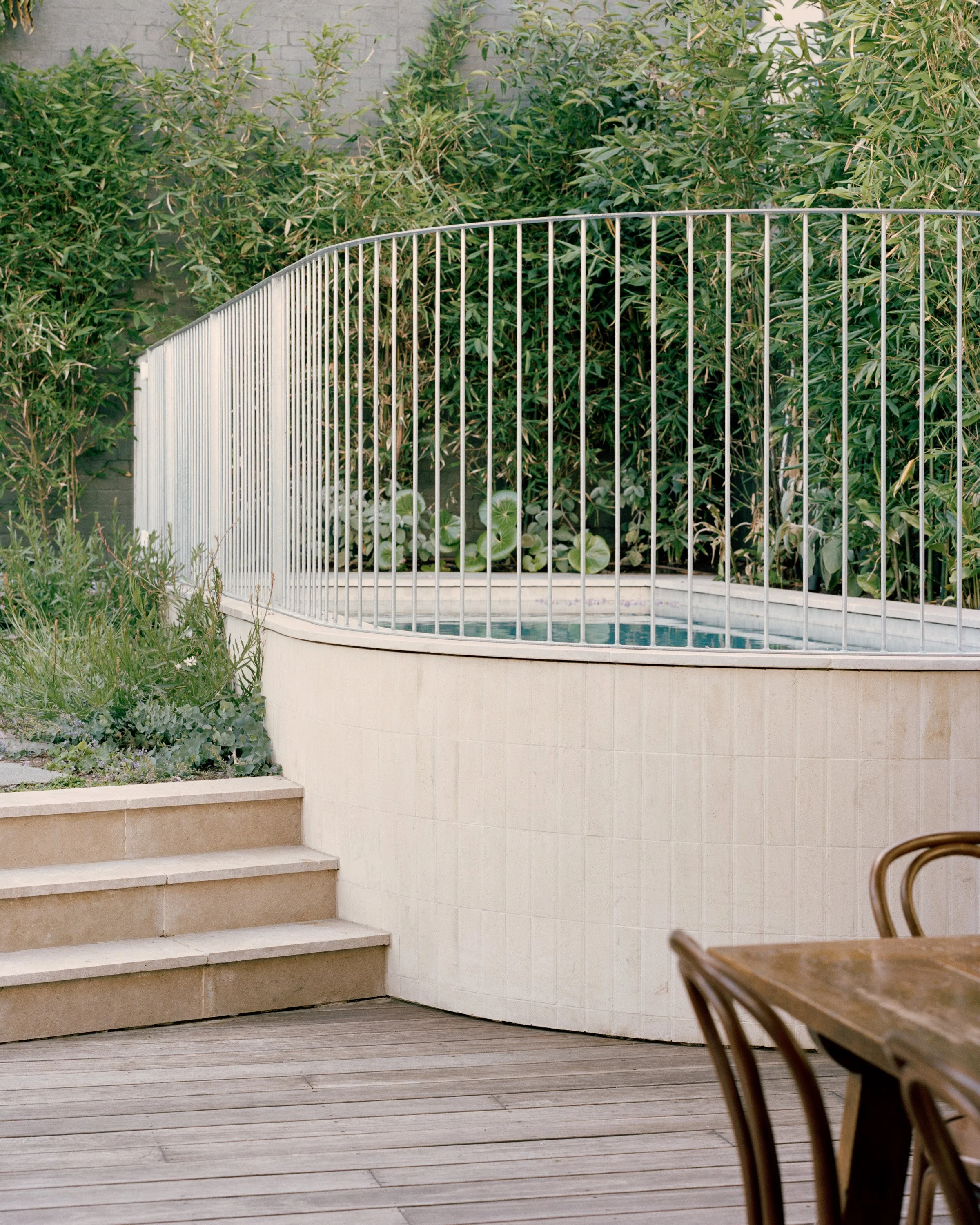
The approach to the project left enough room for the garden to become a real asset. The backyard is compact, but it works hard. There is space for outdoor living, space for children to play, and a pool that has been handled with considerable subtlety. Integrating a pool into a tight site is never simple. Here, curved retaining walls clad in light tiles help soften its presence, while a minimal pool fence keeps views clean. Given the scale of the neighbouring buildings, it is surprising how green and sheltered the house and backyard feel.
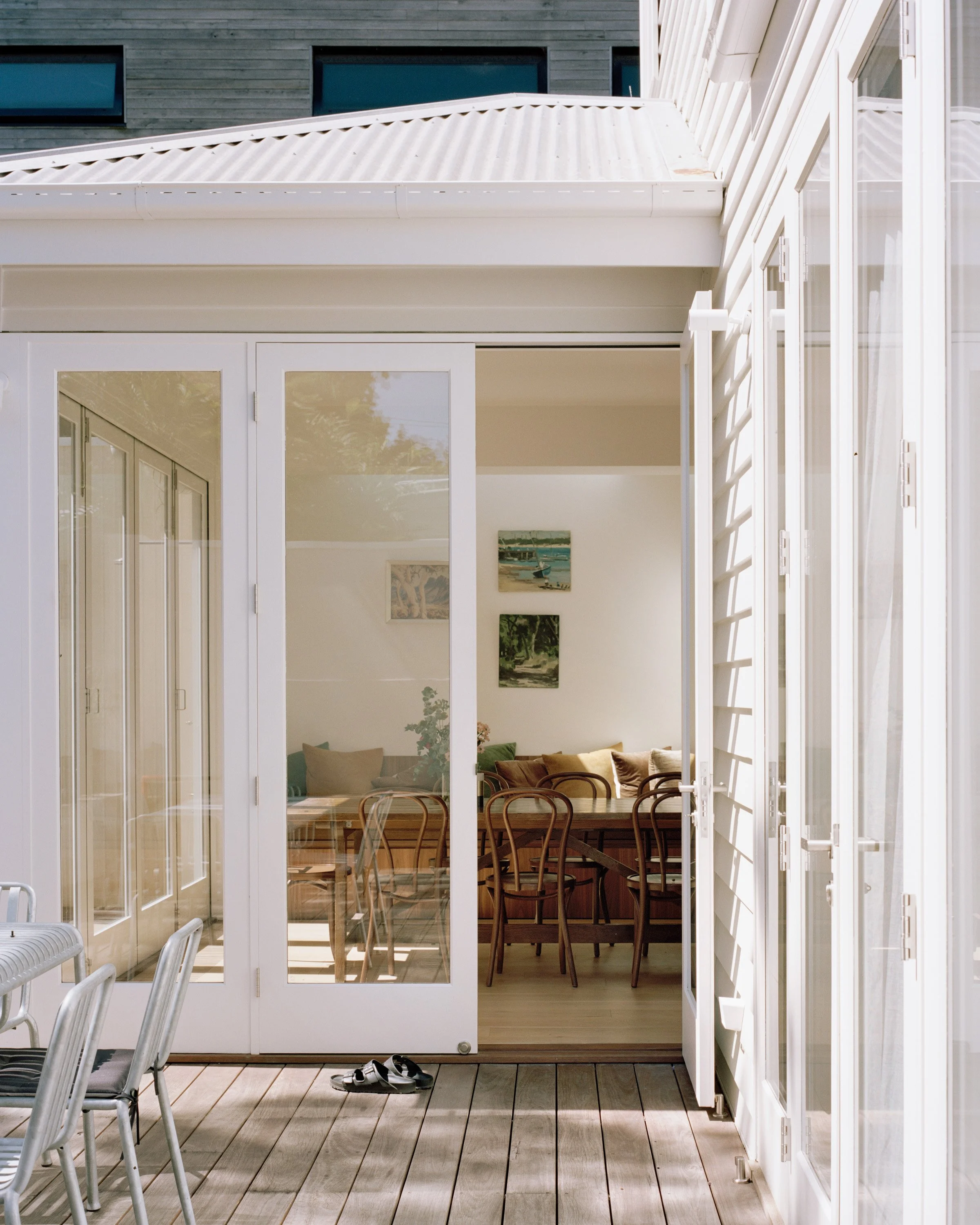
Above: The new fold back doors opening to the garden. A glimpse of the neighbouring apartment building can be seen above the house.
Below: The pool tucked into the corner to the backyard.
A minimal interior with warmth and character
The clients were drawn to a light, airy and minimal palette, perhaps in part as a reaction to the darker, more compromised interior they had previously. White walls, timber joinery and a careful economy of materials give the rooms a sense of quiet clarity and allow the garden to become a central visual presence.
The idea of the "Estonian summer house" is drawn on with a simple yet warm quality to the spaces. The rich timber elements are important as a counterbalance to the pared-back palette. The house feels resolved because the details were considered with real care, and because the Liisa and John placed value on this quality and care from the beginning.
Externally, the front of the house retains its familiar character, while the back speaks more honestly about the house's evolution. A small extension to accommodate the new stair is a contemporary intervention that contrasts with the original house rather than mimicking the heritage architecture.
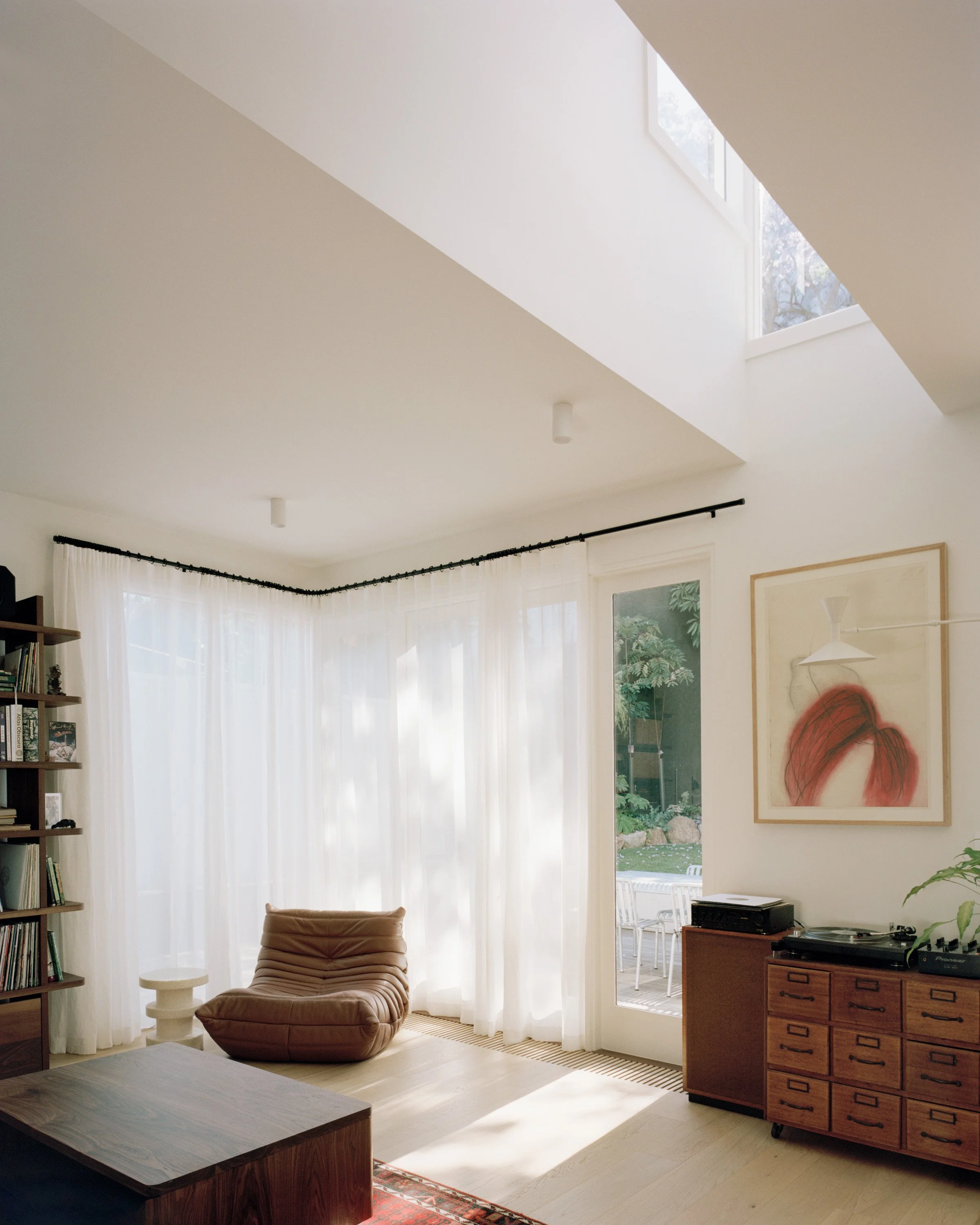
The living room with paired back finishes allows the richer furniture elements to be accentuated.
Sustainability through retention and longevity
In term of the approach to sustainable design, this was embedded in the logic of the project itself. The biggest decision was to retain and rework rather than replace or extend. By keeping the existing footprint and making the house function better within it, the project avoided the material and environmental costs that come with larger additions. Existing fabric was repaired where possible, and new work was made with longevity a priority.
Performance was also improved in practical ways. Double glazing was introduced where it mattered and the stair void now works as a thermal chimney, allowing hot air to vent in summer.
More broadly, the renovation demonstrates a kind of sustainability that is often underrated: designing a house that people can continue to live in and enjoy for a long time. A home that works well, feels good and is built carefully is less likely to need another major overhaul in the near future.
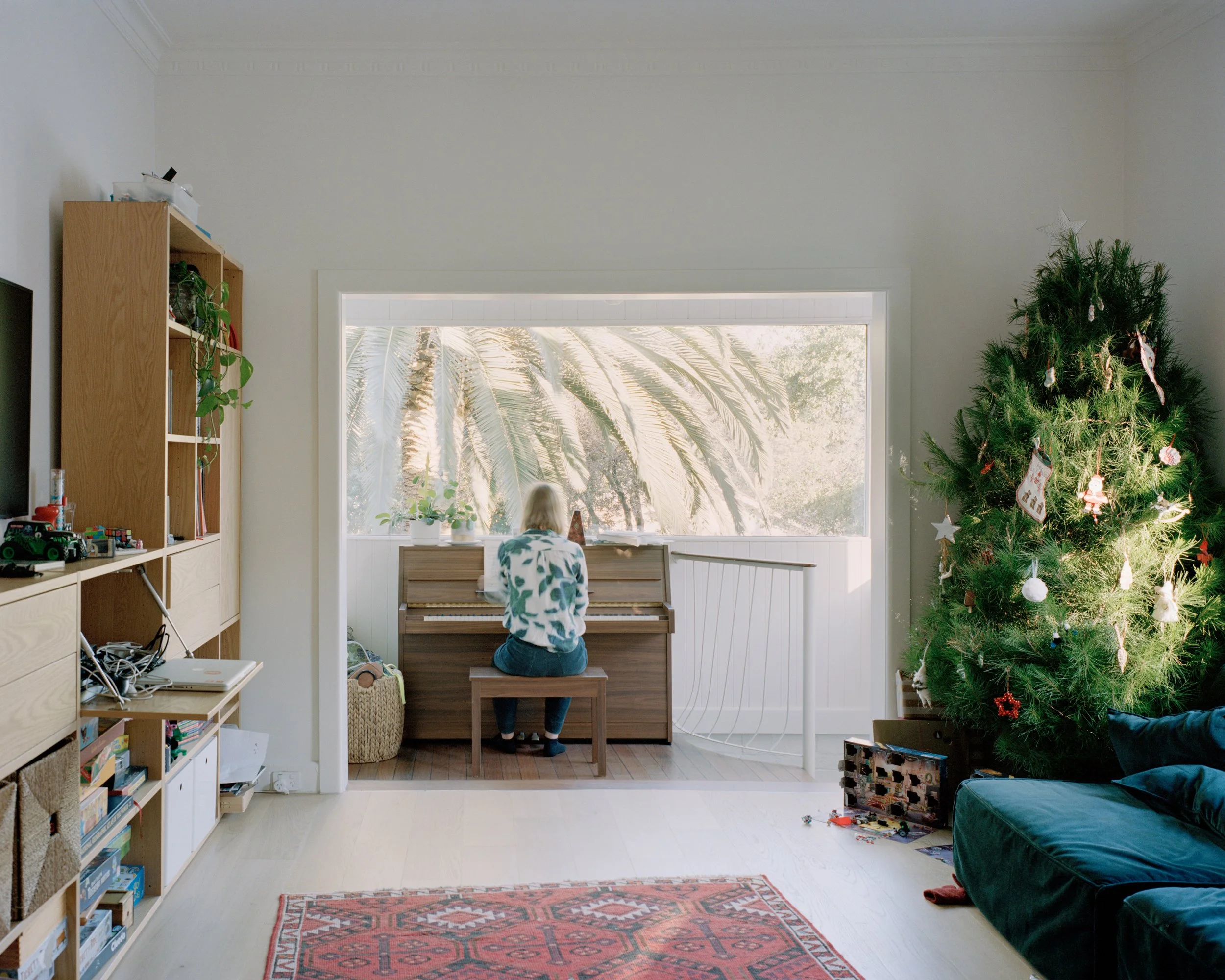
The retained sitting room with access to the basement.
Solving the hidden problems
The house had long-standing issues with damp and water ingress, particularly below the main floor. Early on, it was difficult to know exactly how extensive the damage would be. Once construction began and floorboards were lifted, the full extent of the problem became clear: rotted joists and bearers meant areas of structure had to be removed and rebuilt.
These kinds of discoveries can test a project, both technically and financially. Luckily, contingencies had been allowed for, but the repairs still added significant time and complexity. Holding up the existing upper level while carrying out rectification works below was no small task.
These hidden interventions did end up contributing to the house's long-term value. Once dampness and waterproofing issues were addressed, the basement - previously an unusable, dank space - was reclaimed and fitted out as a proper room becoming another useful part of the home.
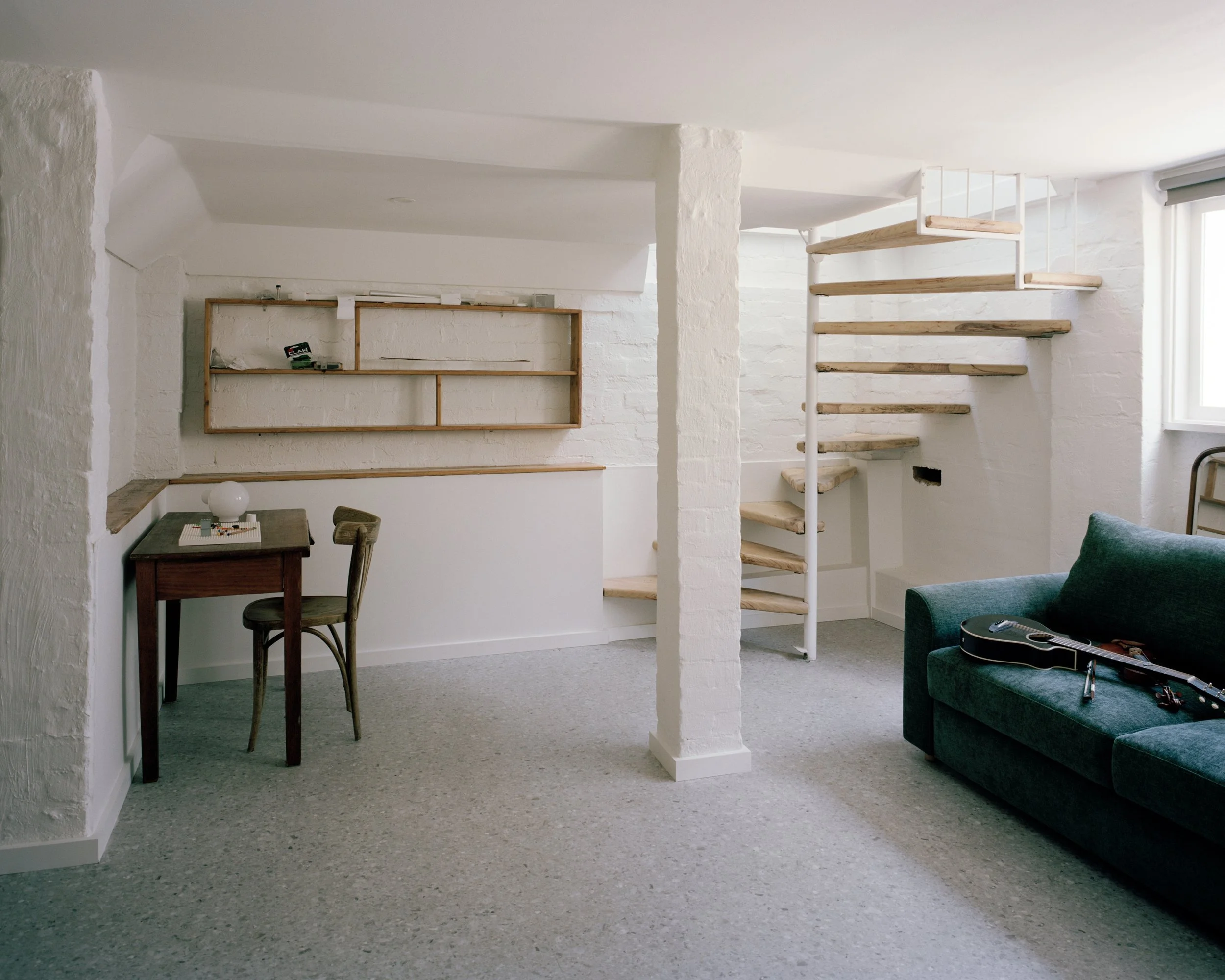
The basement that became a useable space once the waterproofing and dampness issues were rectified.
Rethinking the whole house without rebuilding it
Looking back, what began as a conversation with Liisa and John about a kitchen renovation became something much more ambitious and much more valuable. Bundara Street House shows how a home can change without becoming bigger. Through one decisive planning move, careful spatial editing, and a measured response to budget, site and family life, the renovation transformed the house that felt awkward and inward-looking into one that is open, calm and a joy to live in.
It is now a house with multiple ways to be occupied: social and private, active and restful, connected and separate. It supports work, family life, outdoor living and retreat. It engages the garden rather than turning away from it. And it manages to create a genuine sense of sanctuary in a dense urban setting.
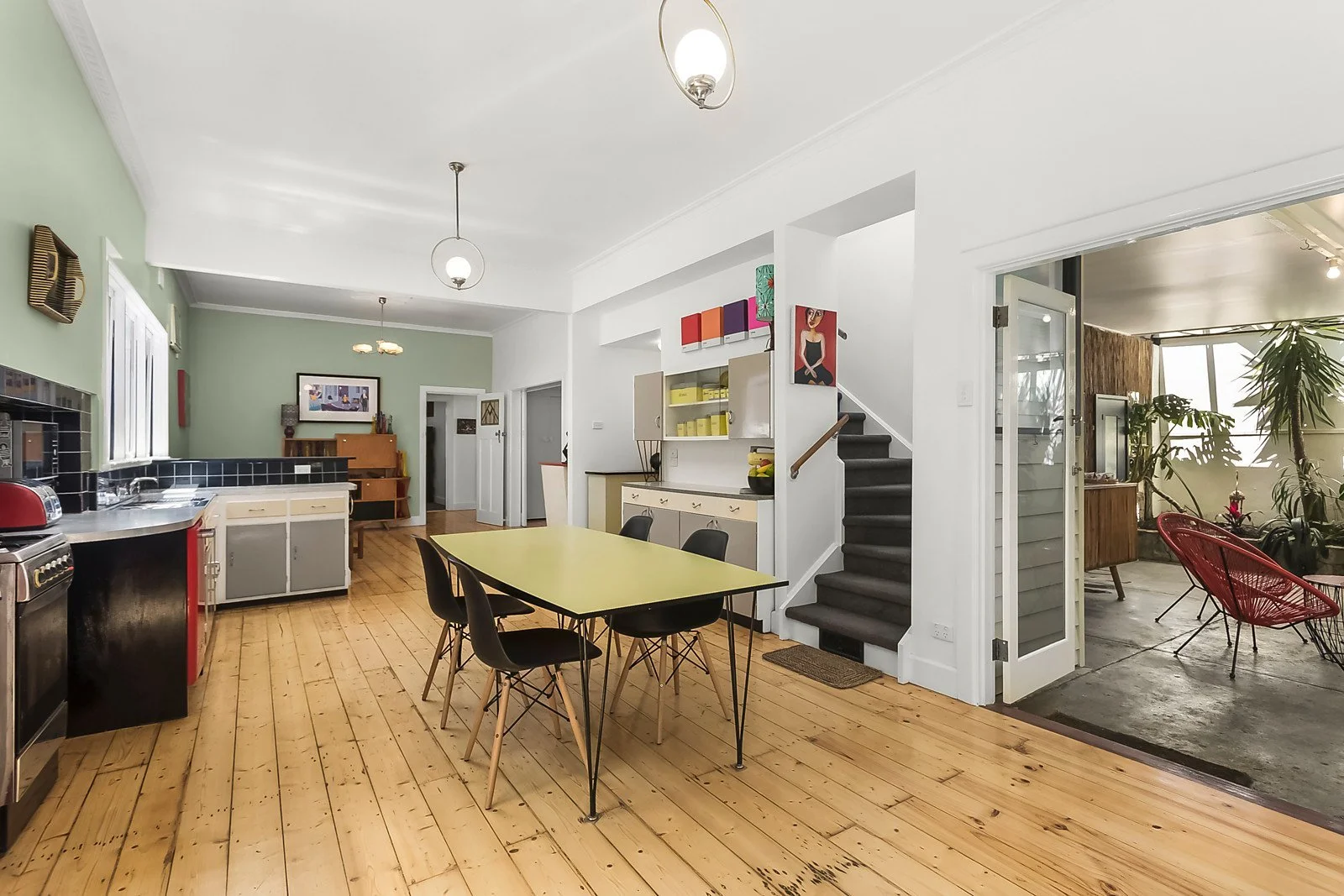
A view of the interior of the house before the renovation. The previous stair split the back of the house into two long, narrow spaces that were uncomfortable to use and difficult to furnish.
The rear of the house before the renovation showing the lack of connection between the house and the backyard.