
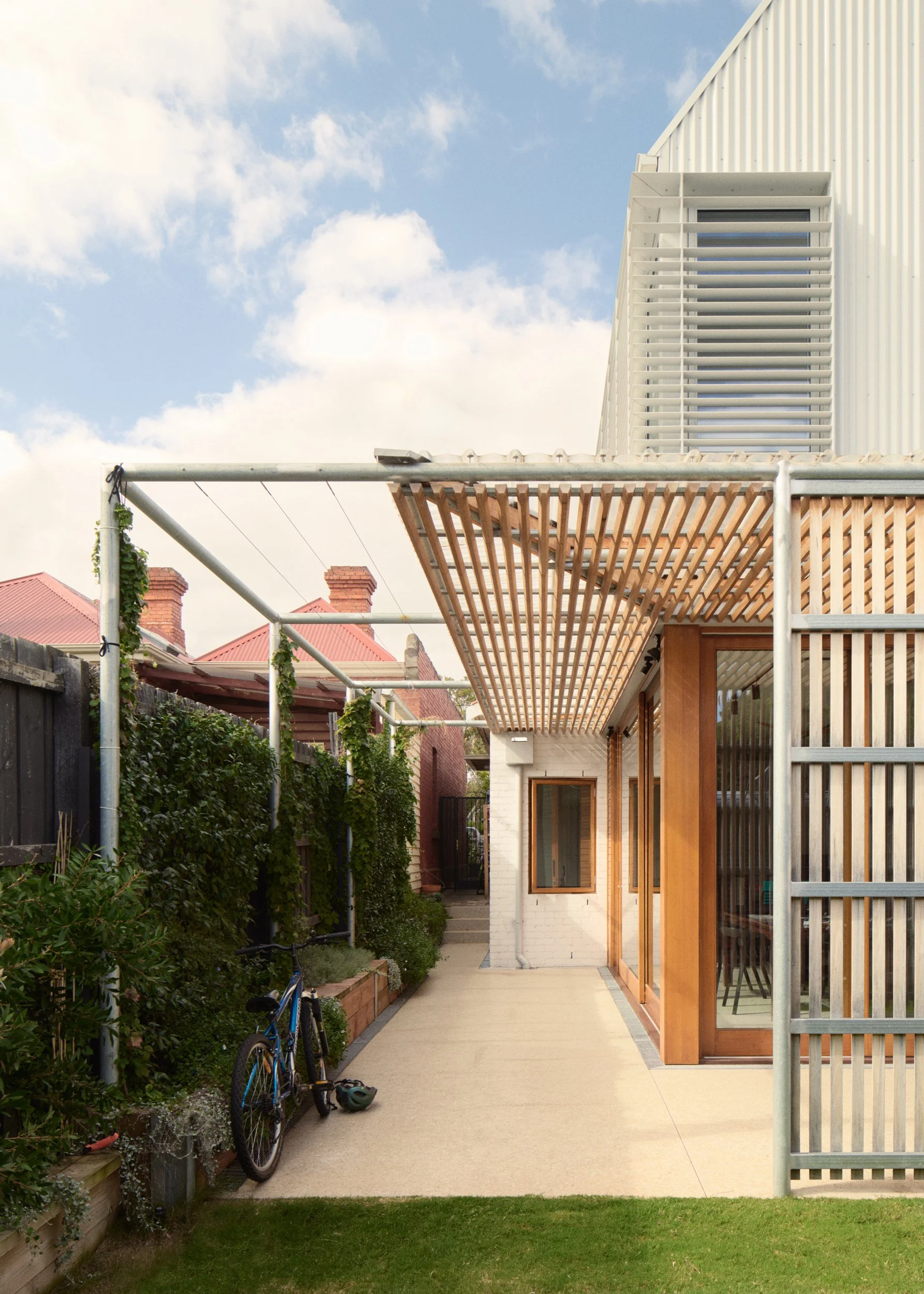
Plow Street House
Location: Thornbury, VIC
Building Type: Residential Extension
Photographer: Alex Reinders
Helen, George and their two young boys approached us to renovate their existing house into a long term home. While the original frontage of the existing California Bungalow remained in reasonably good condition, a previously constructed extension at the rear wasn't meeting the needs of the family. The house offered limited connection to the outdoors, the internal spaces felt tired and the layout did little to take advantage of the site's potential.
Before engaging us , Helen and George previously worked with a building designer. While their proposal accommodated the family's functional requirements, the design relied on a substantial upper-level extension to provide additional space but left many of the challenges at ground level unresolved. Engaging an architect became an opportunity to rethink the project more holistically and find a more suitable solution.
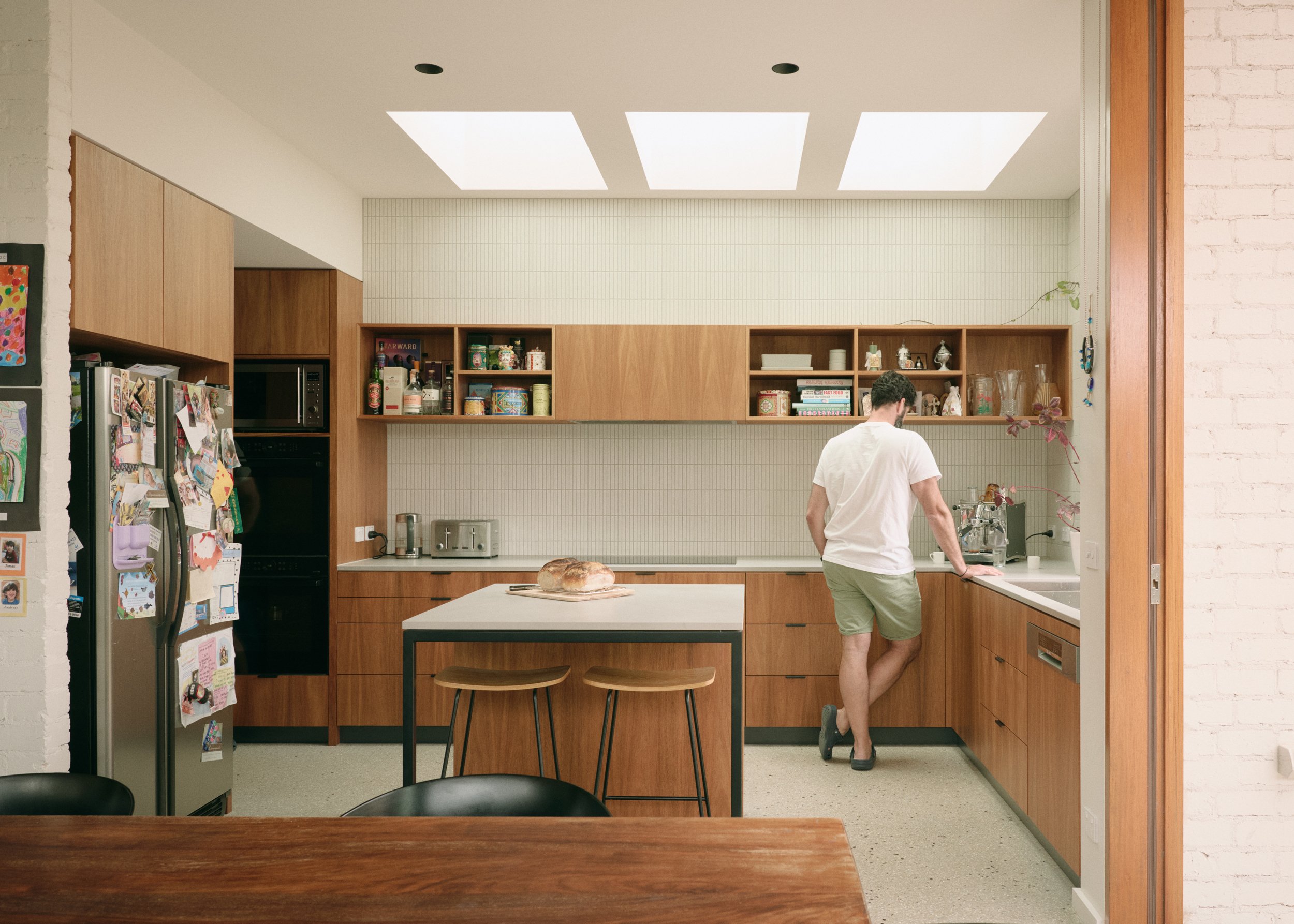
The kitchen is washed with natural light coming through the south facing skylights
The Aesthetic
The material palette follows the same principles that underpin the planning of the house: restraint, longevity and a strong connection to the landscape. The clients were drawn to warm, natural finishes that age well and require minimal maintenance. the project places emphasis on the landscape as an integral part of the architecture. Together, greenery, warm materials and natural light create a home that feels calm, cohesive and spacious.
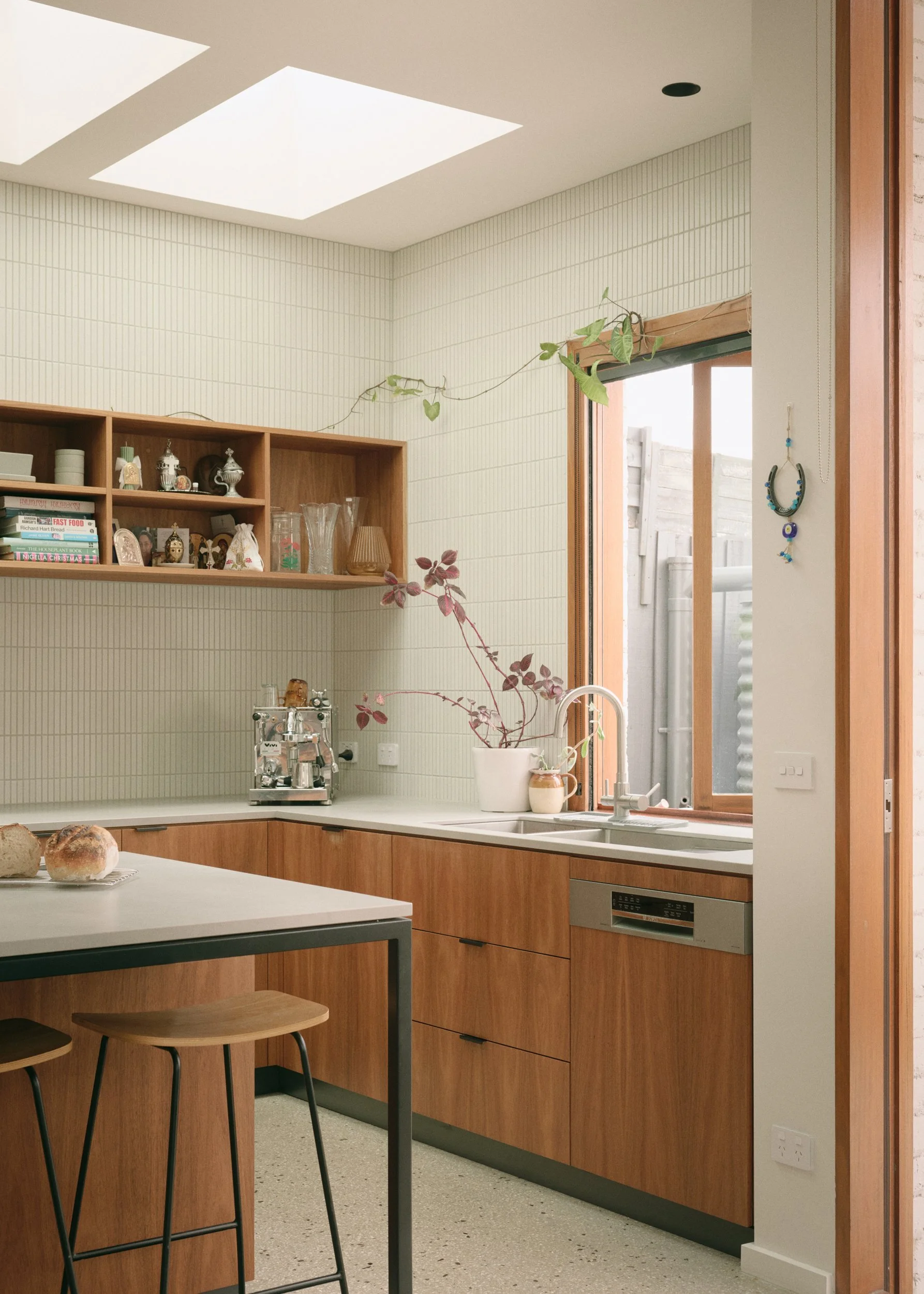
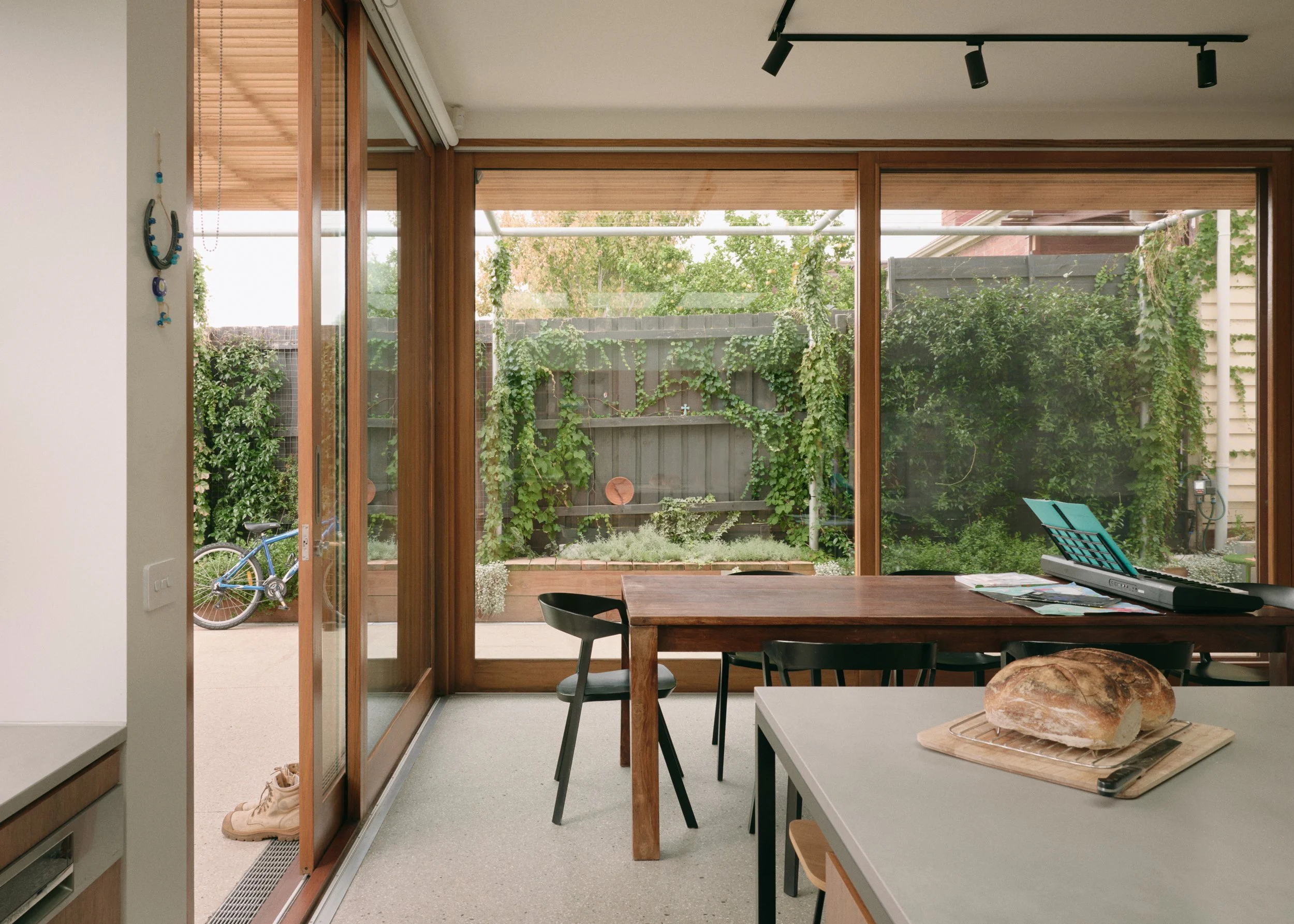
Internally, timber veneer joinery introduces warmth, while exposed aggregate concrete floors and painted brick walls provide texture. The finishes are intentionally understated, allowing the quality of light, views and connection to the outdoors to take precedence.
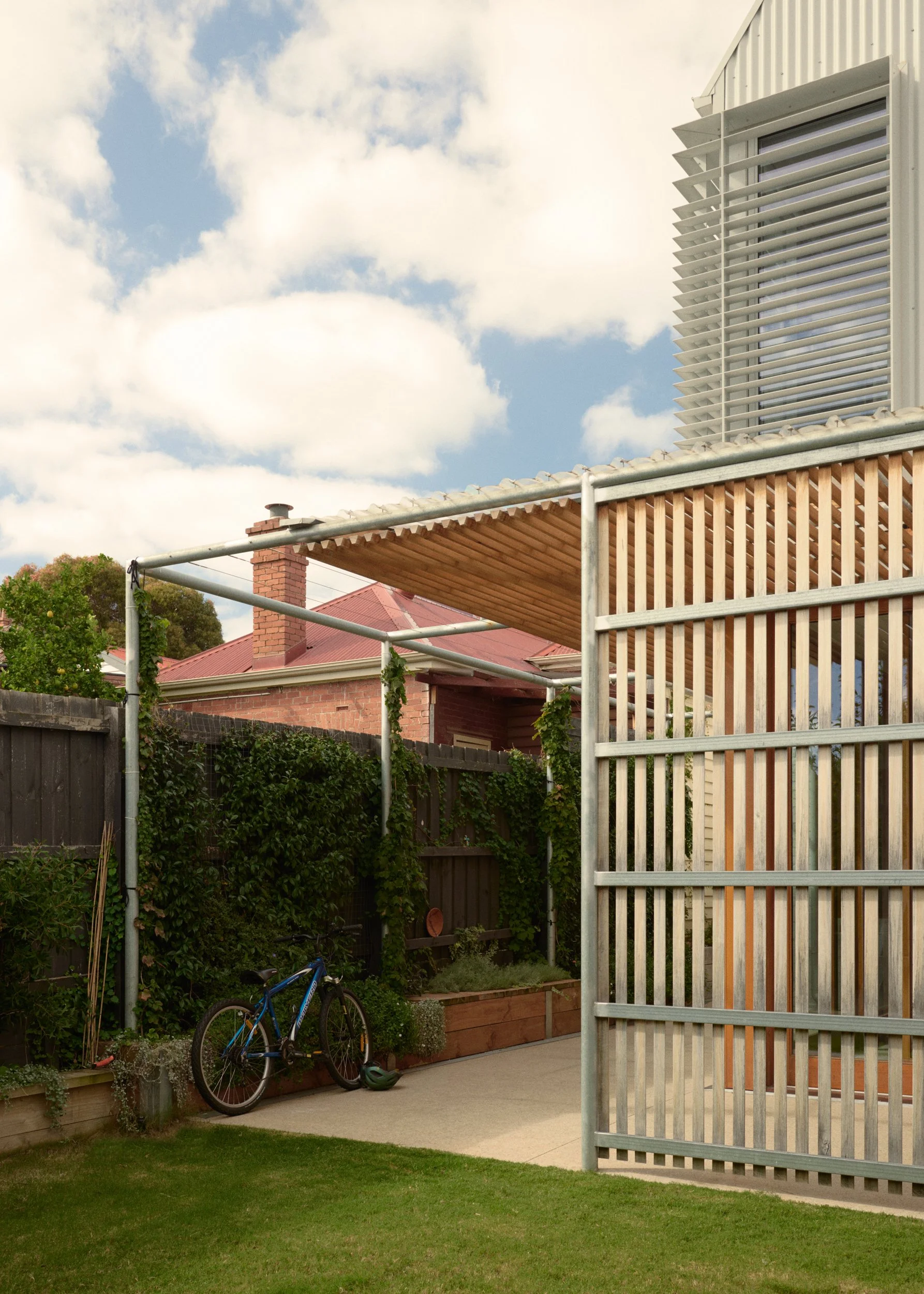
Externally, the palette is similarly restrained. Painted recycled brick wraps the lower level, while corrugated metal cladding to the upper floor integrates with the window trims and screening to read as a single, cohesive element. The thin steel pergola connects the two levels, while the warmth of the timber windows and doors intentionally echoes the internal joinery. The continuation of materials from inside to out strengthens the relationship between the house and garden, reinforcing the sense of continuity between the spaces.
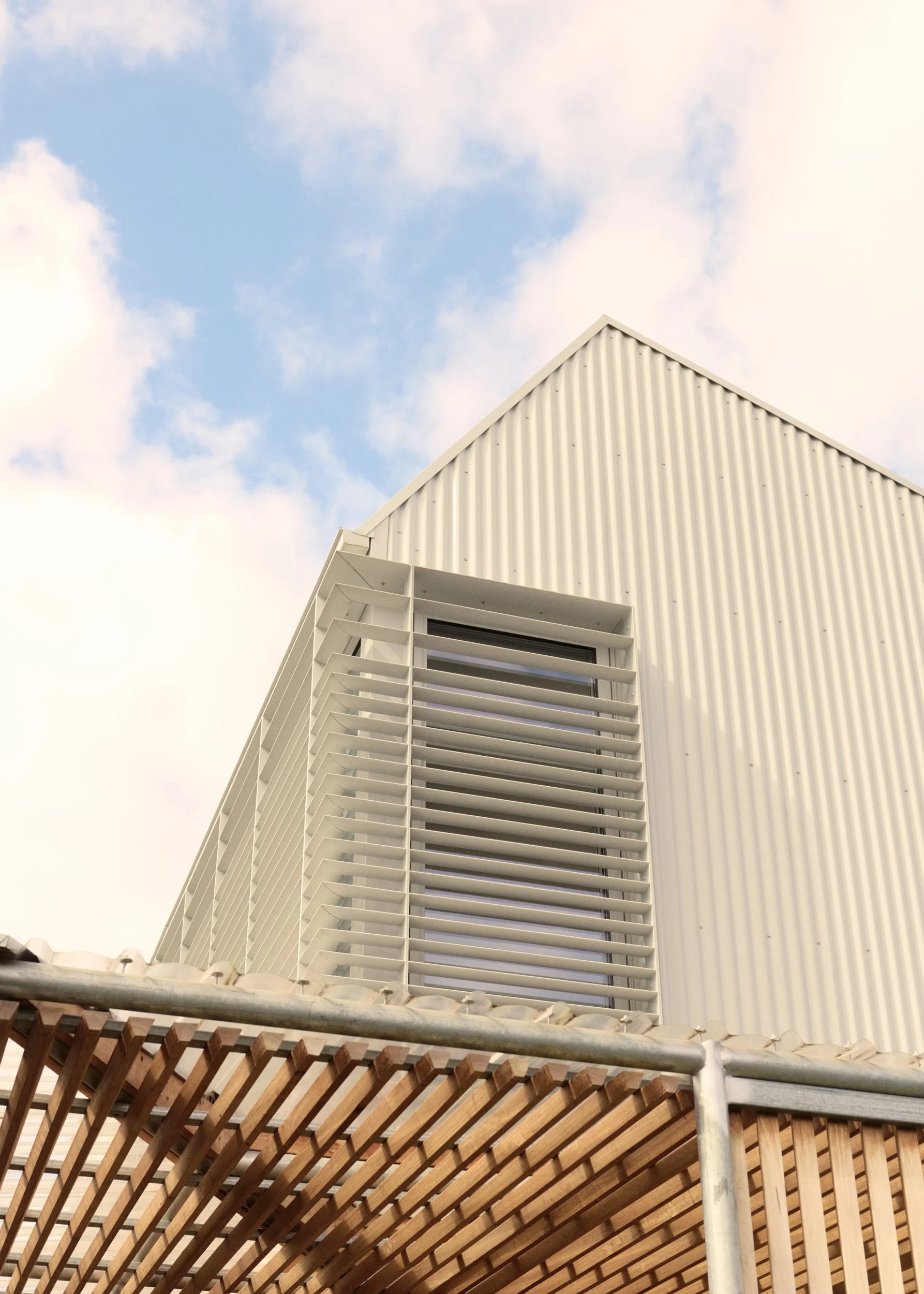
Left: The north and west facing screened glazing to the upper level.
Right: The fixed slatted screening viewed from outside.
Despite the constraints of the site, the living spaces feel remarkably light and open. Large areas of screened glazing to the north and west maximise access to natural light, while more solid walls to the south provide thermal mass.
A south-facing skylight above the kitchen introduces soft, indirect light throughout the day without exposing the space to harsh summer sun. Combined with the higher ceiling over the living area, these elements create an interior that feels bright, open and comfortable year-round.
A simple cohesive palette is applied to the interior and connected exterior spaces of the home
Sustainability
Passive solar design principles underpin the environmental performance of the home. Carefully shaded glazing maximises the benefits of the site's northern orientation while controlling heat gain through the hotter months. High levels of insulation were incorporated throughout the new extension and existing house where possible. Together, these measures help maintain a more stable internal temperature and reduce reliance on mechanical heating and cooling.
Thermal mass also plays an important role. The exposed concrete slab and brick walls absorb winter sun and gradually release warmth back into the home. During summer, the external shading, thermal mass and high insulation levels help keep the home cool, with the clients reporting that even the upper level remains comfortable during warmer periods of the year.
Retaining existing building elements and services where they still offer value is also a fundamental sustainable response. While the rear extension was replaced to unlock the home's potential, the original house was retained and upgraded where needed with existing systems preserved. Combined with rainwater harvesting for toilet flushing and garden irrigation, the project demonstrates that improving environmental performance is often as much about making thoughtful use of what already exists as it is about introducing new technologies.
Excessive heat gain in summer through large north and west facing glazing is protected by the slatted pergola cover
At its core, the project is an exercise in making the most of what is available. The design prioritises an efficient use of space, minimising the scale of the renovation while ensuring each room and outdoor area performs multiple roles. Rather than replicating the heritage details of the original bungalow or adopting a more assertive architectural language, the extension offers a contemporary response that is carefully scaled and considered, sitting comfortably within its context while remaining clearly of its own time.
This project is an exemplar of the important relationship between a house and the outdoors on smaller inner-urban sites. With a focus on creating indoor and outdoor areas that are well connected and layered in their function, the project's broader ambition: to build only what is needed, and to make every space count is reinforced.
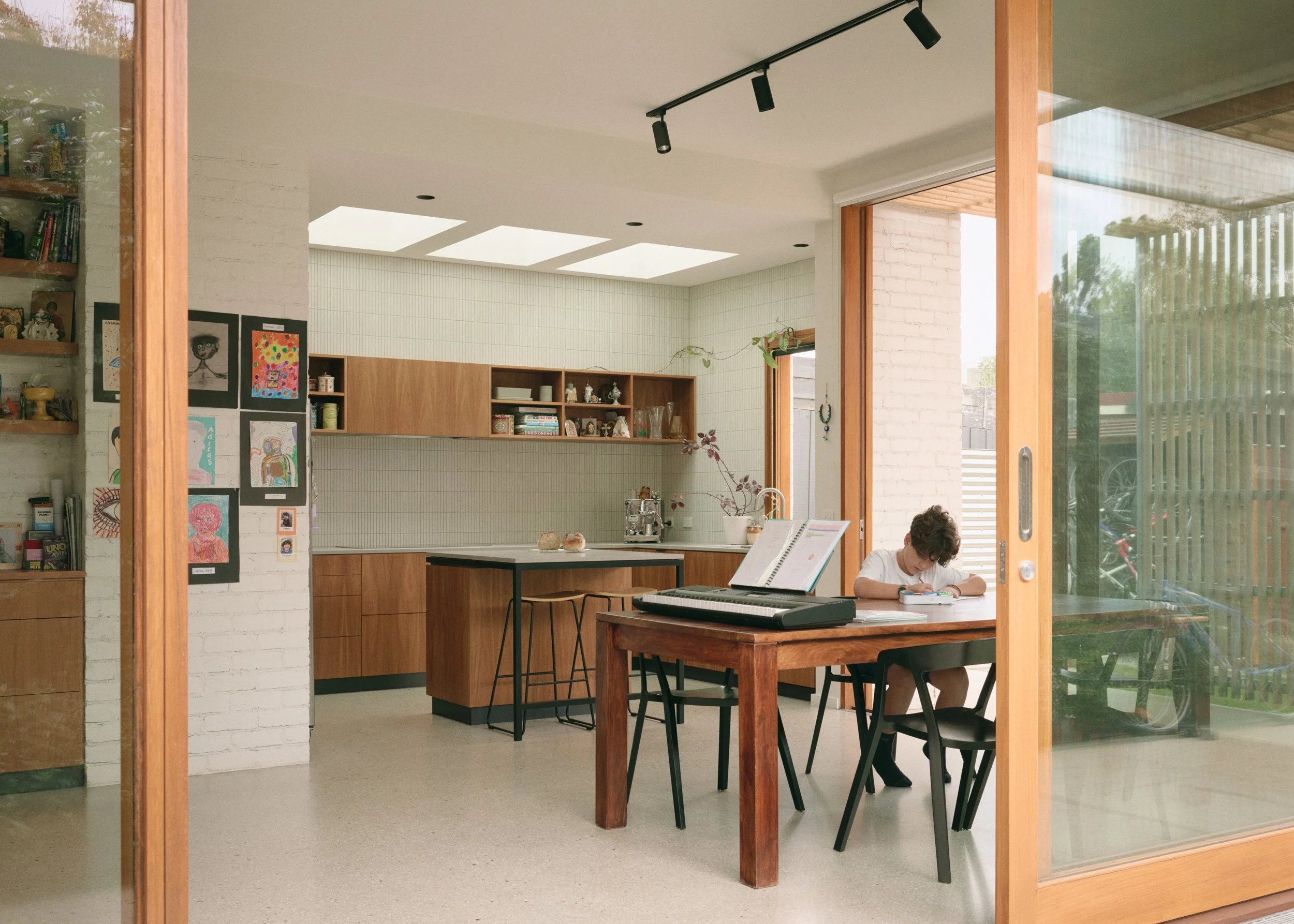
A view into the new ground floor extension.
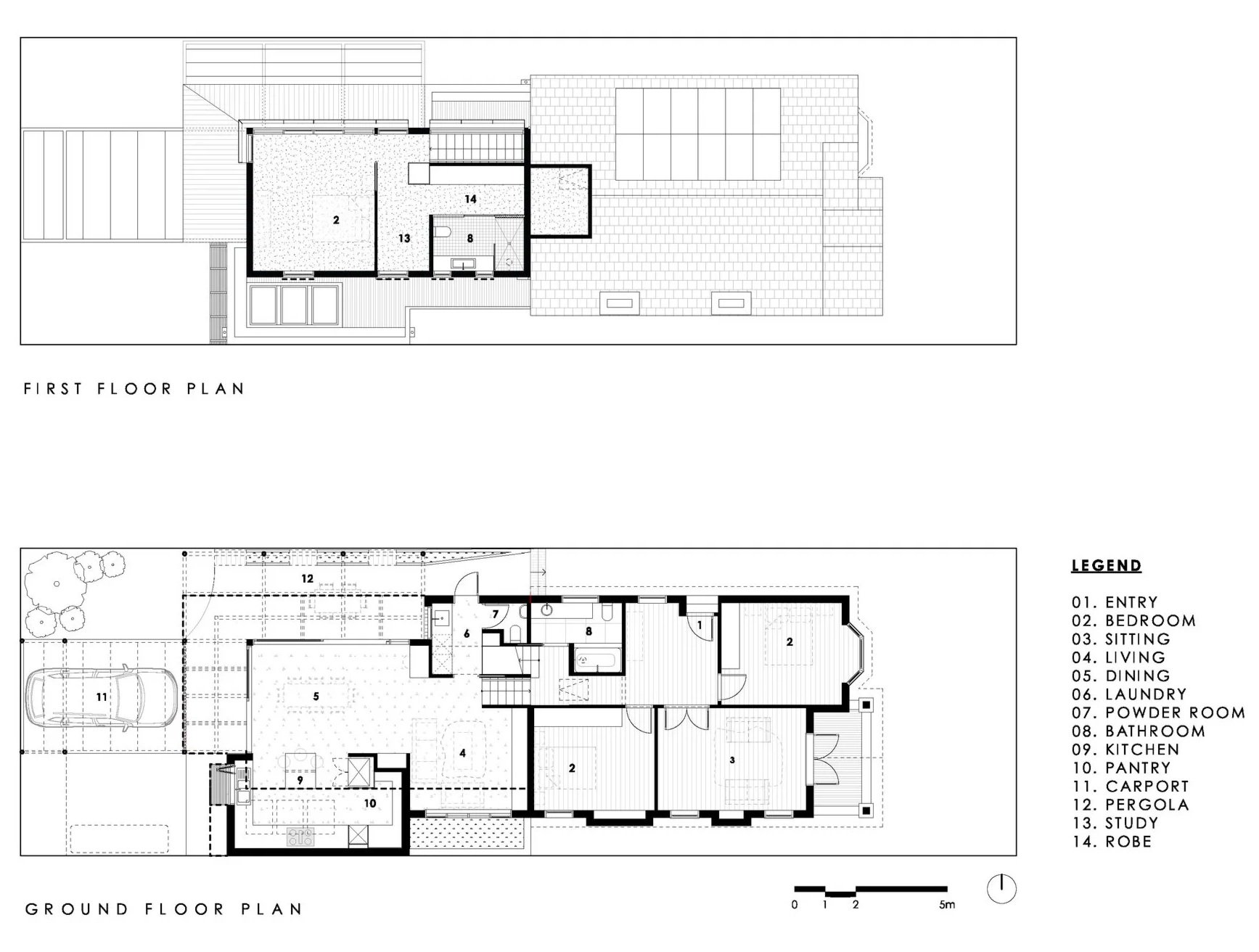
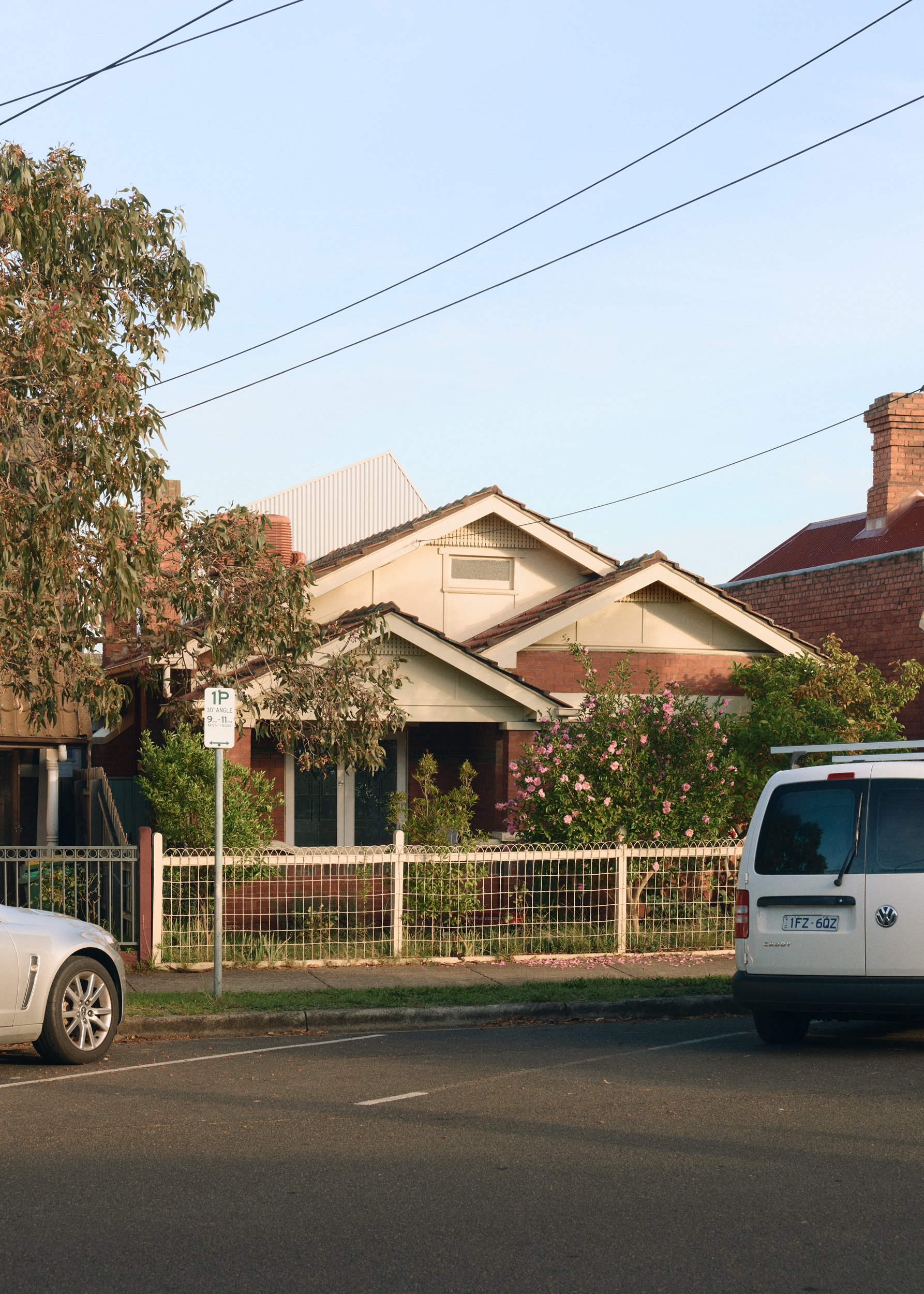
The existing house is a classic California bungalow with red brick cladding and a tiled roof. The original heritage portion of the home contained two bedrooms, a sitting room, a study and a side entry. At the rear, the previous extension incorporated a laundry and bathroom alongside an open plan kitchen, living and dining area. While somewhat functional, these spaces had limited connection to the outdoors. The deck was approximately 1.5 metres above the backyard, separating the living spaces from the narrow outdoor area occupied primarily by a paved driveway and a shed.
Helen and George's brief was relatively simple: add an additional bedroom so that one of the front rooms could be retained as a second living space, improve the kitchen, living and dining areas and create a stronger relationship with the outdoors.
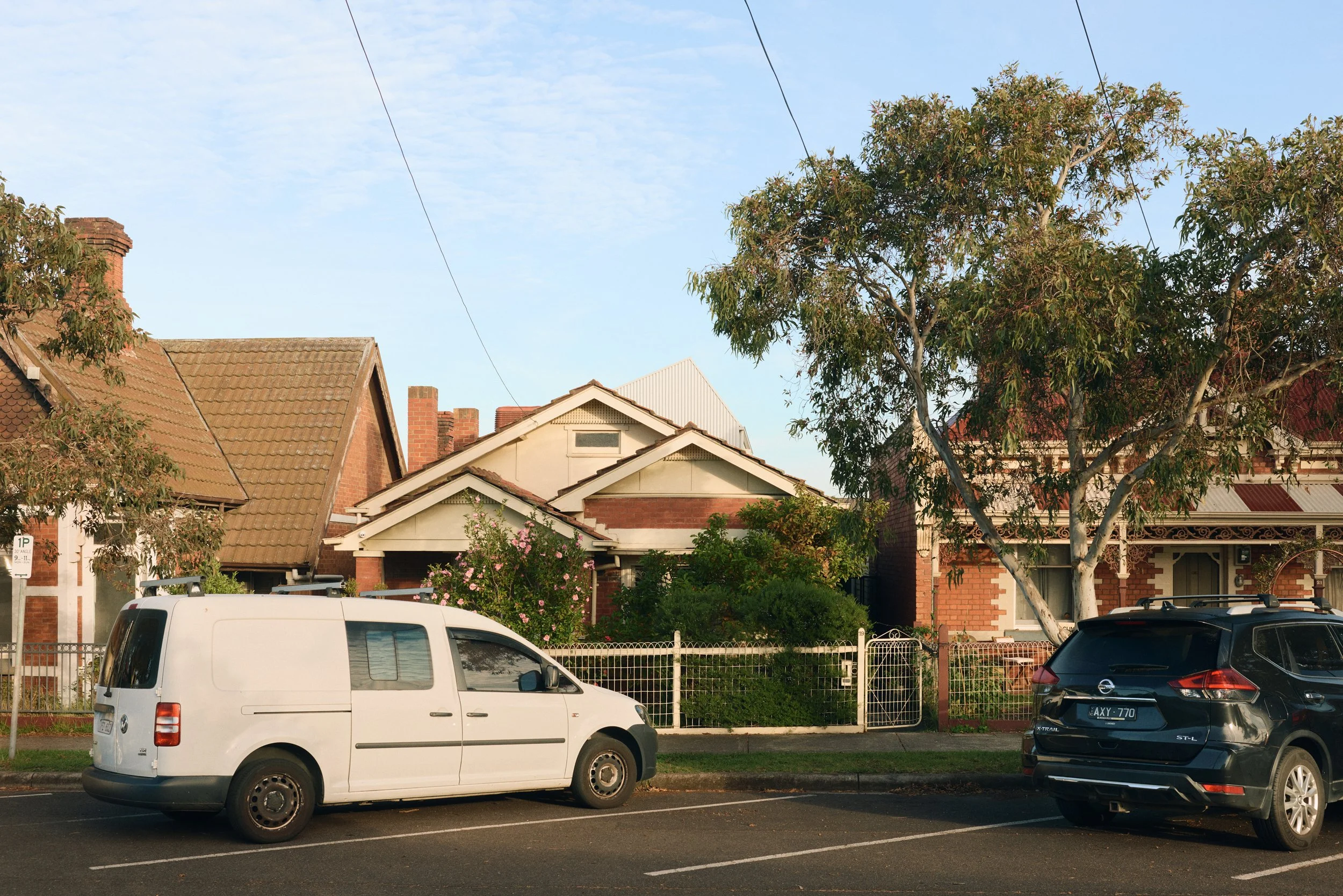
The existing heritage home within the streetscape.
The Design Response
While retaining existing building fabric is often a valuable and sustainable approach, in this instance the previous addition limited the home's potential to address the issues that had prompted the renovation in the first place. Replacing it created an opportunity to respond more carefully to both the site and the family's needs.
The design response centred on a simple but significant move: lowering the new rear extension to align with the backyard. This created a split-level arrangement, with the original front portion of the house remaining at its existing floor level and the new living spaces stepping down to meet the landscape. In doing so, the natural slope of the site becomes an asset rather than a constraint.
Layered Living
A laneway at the rear of the property provides vehicle access, but with outdoor space at a premium, the landscape was designed to serve multiple purposes. The permeable car area doubles as open space for play and when entertaining, can become an extension of the outdoor living area.
Despite only occupying around 90 square metres, the outdoor space accommodates a range of uses. Covered outdoor dining, bike parking, external storage, a rainwater tank and built-in seating are all carefully integrated. A servery window from the kitchen further strengthens the connection between inside and out.
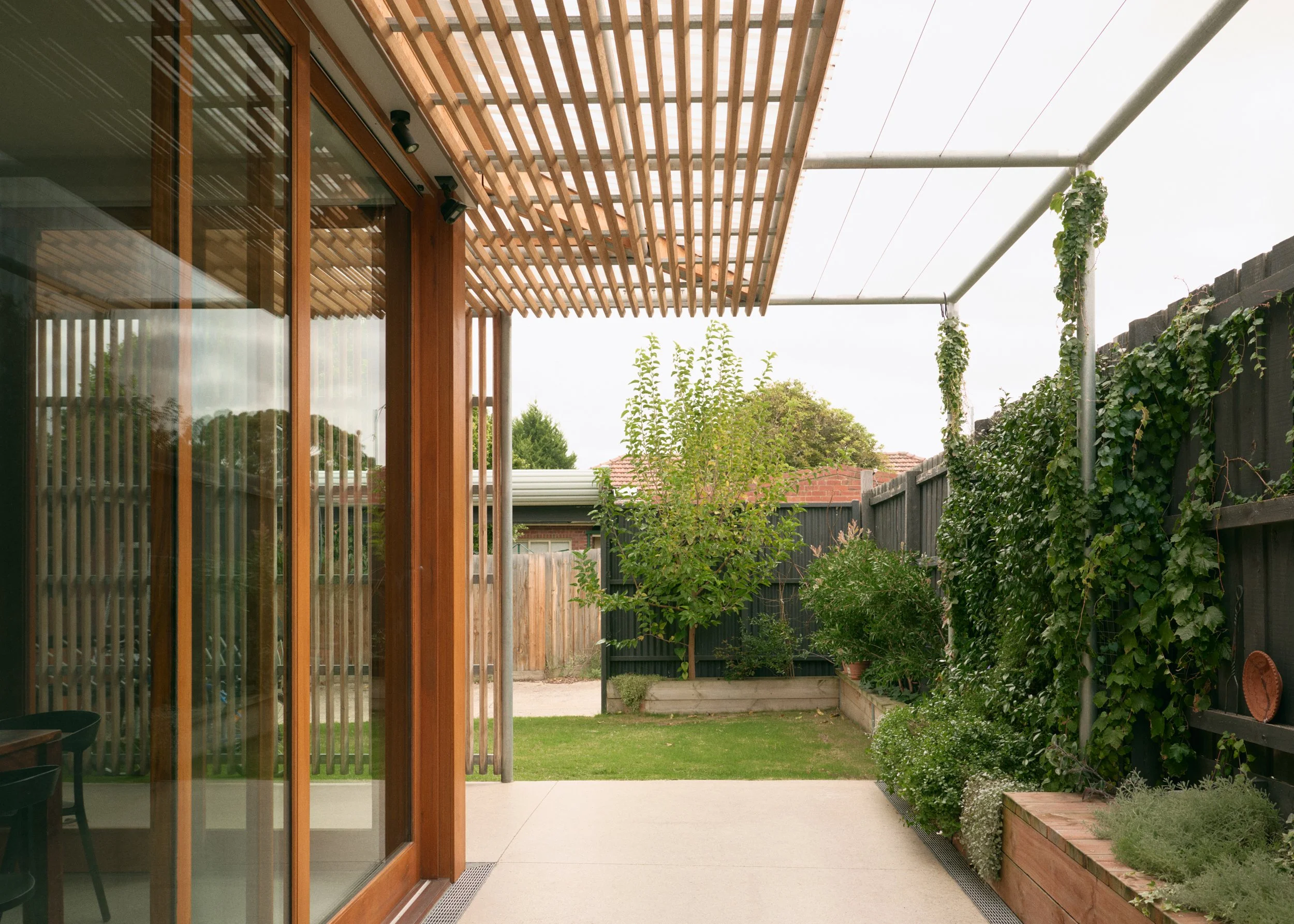
The tight outdoor space accommodates a range of uses.
With neighbouring buildings close by, the landscape design prioritises views onto greenery with vertical planting enhancing the outlook from within the home. What was once a disconnected and under-utilised backyard, becomes a richly layered outdoor space that feels larger than its footprint and acts as a genuine extension to the interior living areas.
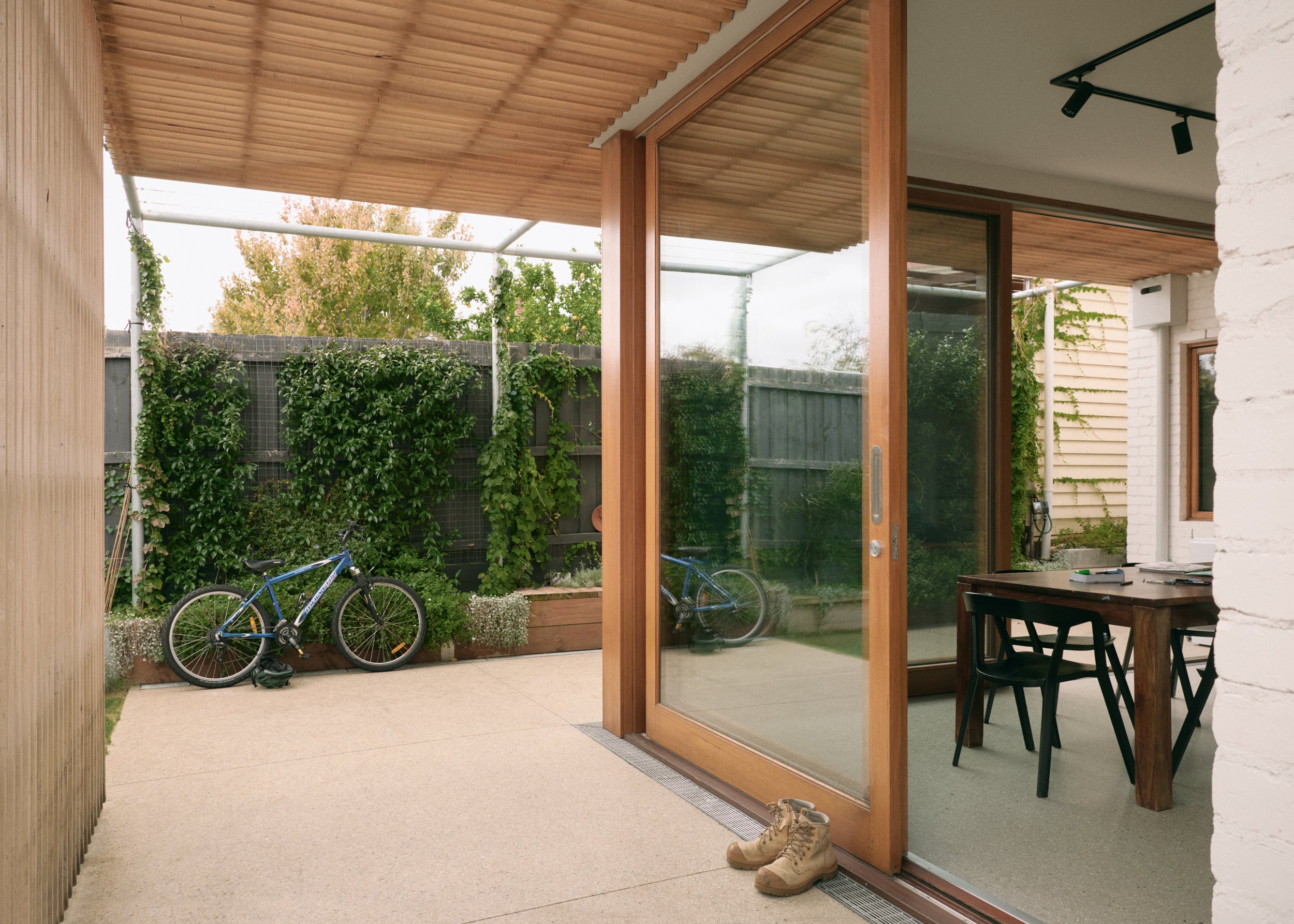
The outdoor area becomes an extension to the indoor living space.
The relationship between the kitchen, dining, living and outdoor is shaped by the family's love of hosting. Large openings and versatile outdoor spaces allow entertaining to extend naturally outside, comfortably accommodating family and friends.
A similar approach was applied to the interior to ensure an efficient layout with no wasted space. Whether it's circulation space, a study nook or recessed storage, the spaces surrounding each room are designed to accommodate additional functions minimising the need for excess floor area.
An upper level was introduced to accommodate the additional bedroom. By stepping the new addition down with the natural slope of the site, the overall form remains modest in scale and the transition between old and new feels natural.
The extension draws on the rhythm of the existing California bungalow roof, reinterpreting its gabled form rather than replicating it. The result is a contemporary addition that sits comfortably within the heritage streetscape and surrounding neighbourhood.
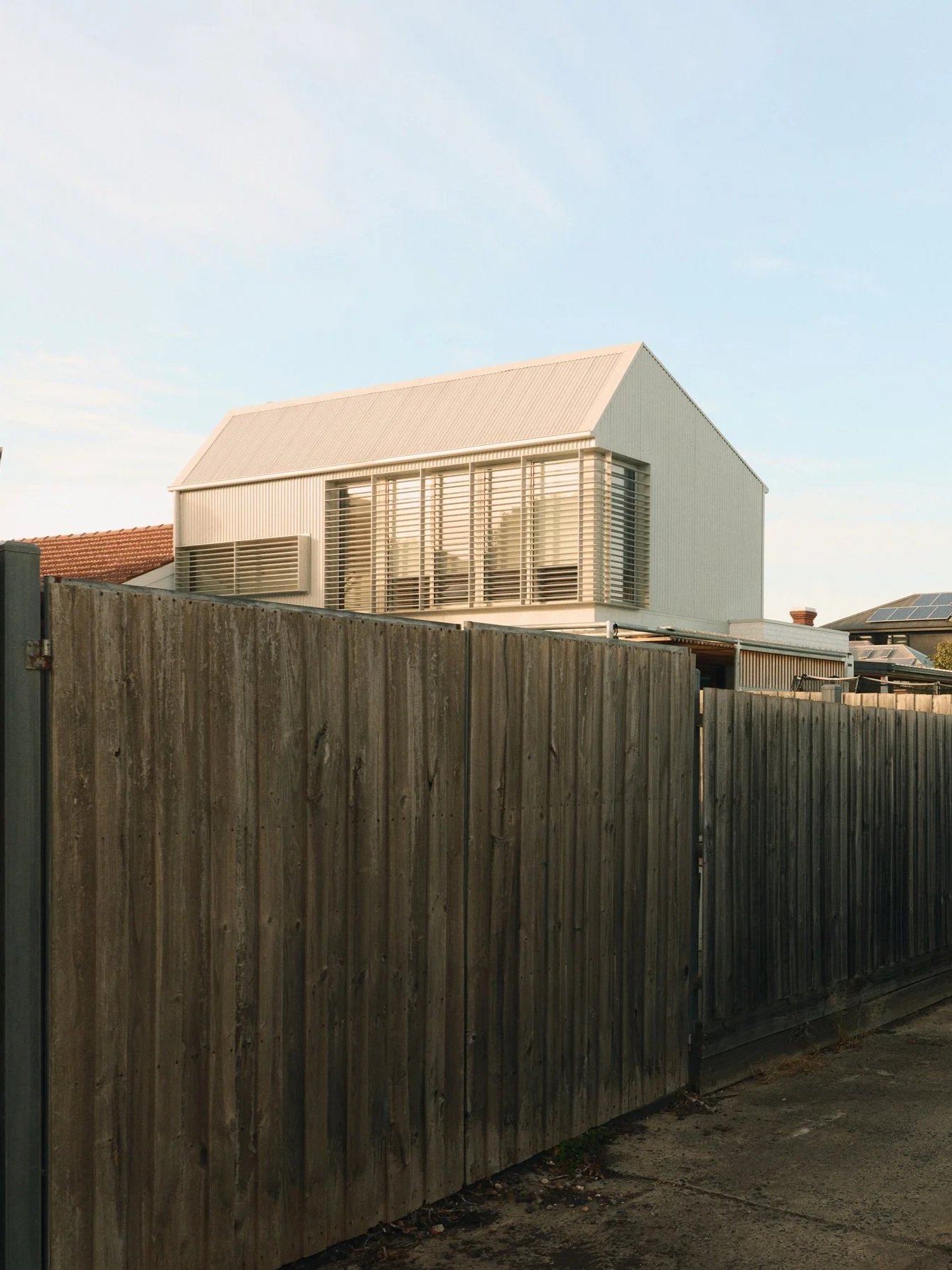
Left: The extension viewed from the rear lane.
Right: The extension viewed above the existing gabled roof.
Accessing Views While Respecting Privacy
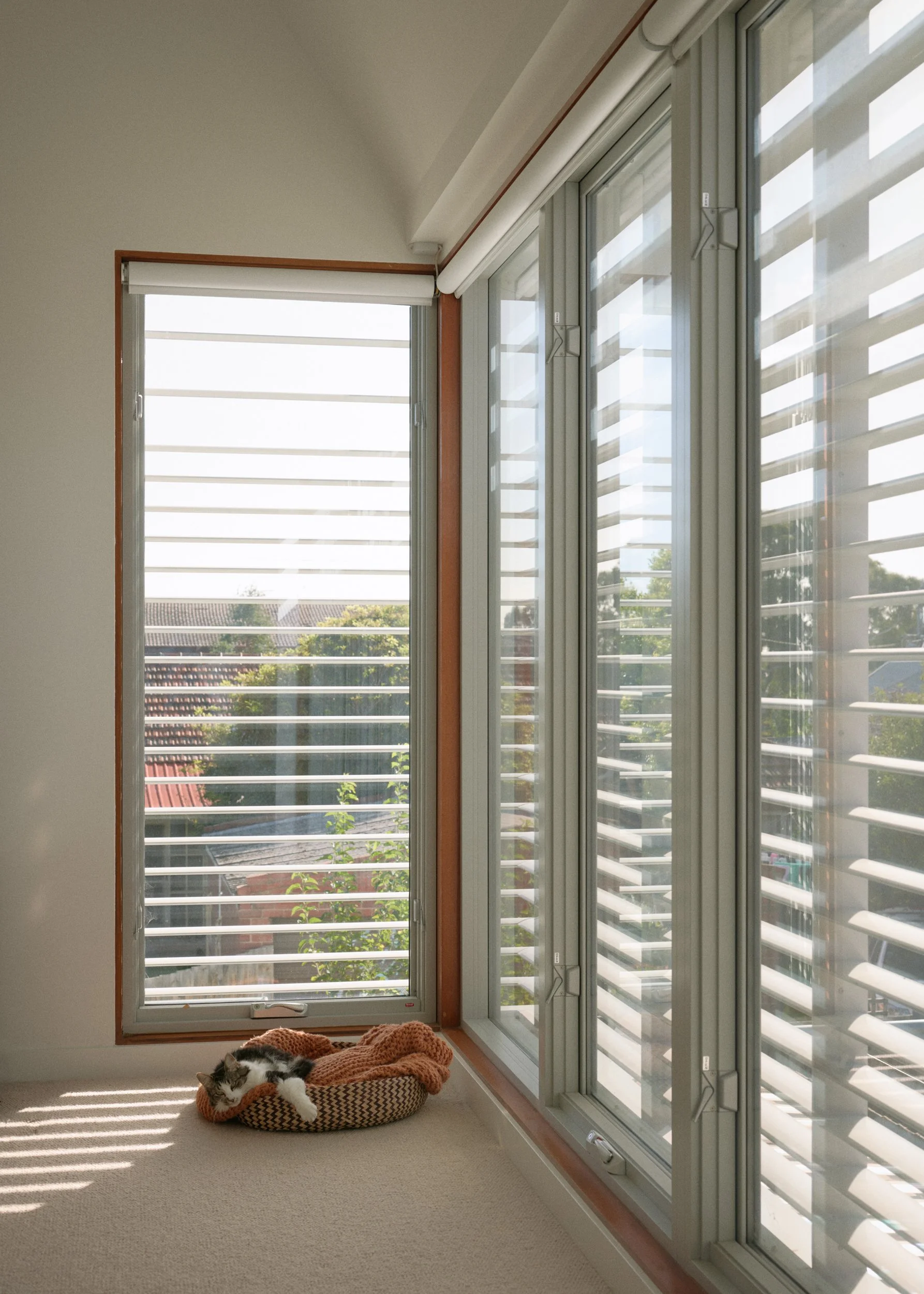
The new upper level was designed to take advantage of the northern orientation while responding to the privacy constraints typical of an inner-urban site. A horizontal slatted screen provides both passive solar shading and limits direct views into neighbouring properties. The deeper profile of the slats increases the spacing between them, framing views upward to the sky, surrounding rooftops and distant greenery.
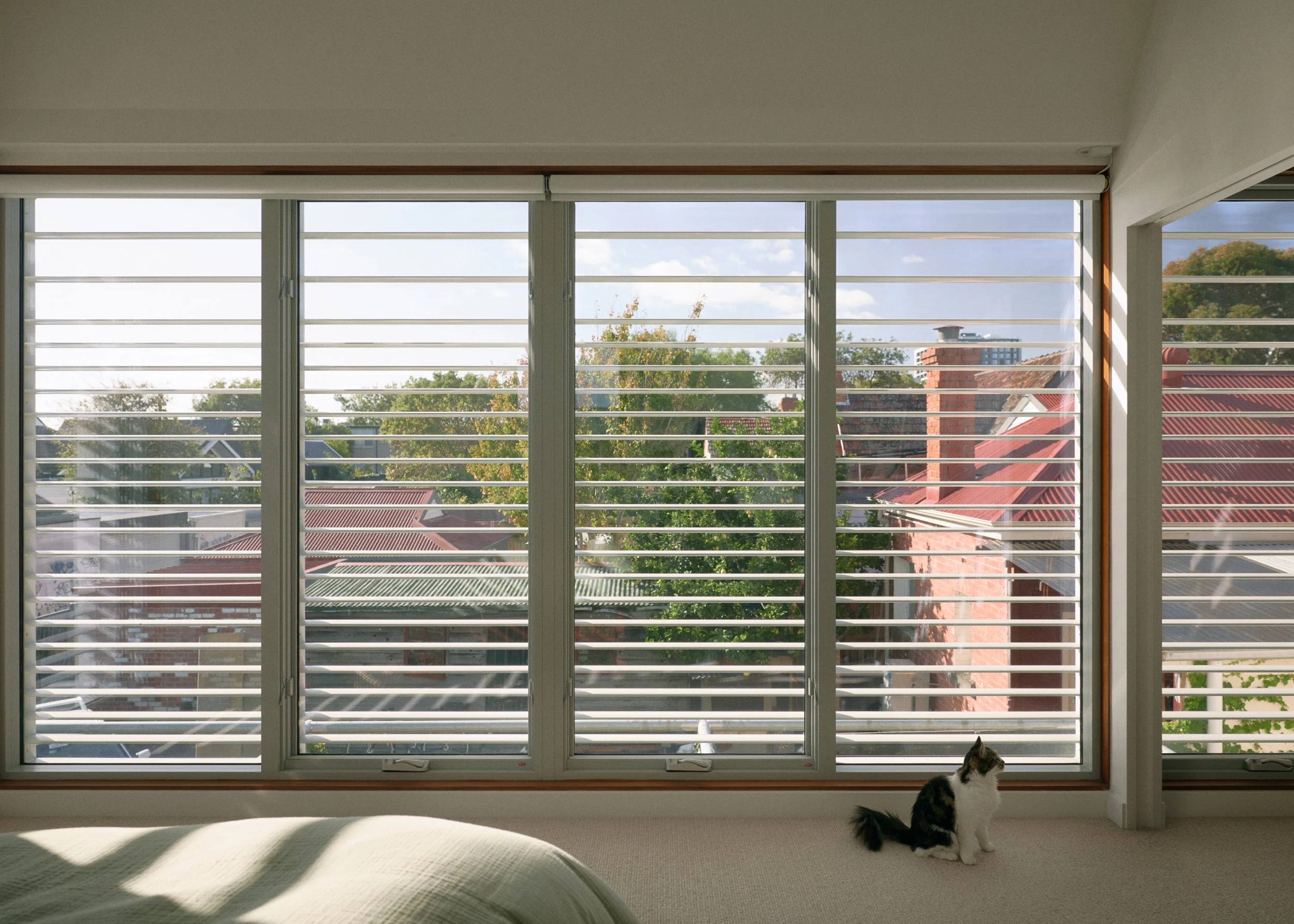
Rather than relying on conventional privacy screens that restrict outlook, the approach applied balances privacy, solar performance and amenity, creating a light-filled upper level with a strong sense of openness.
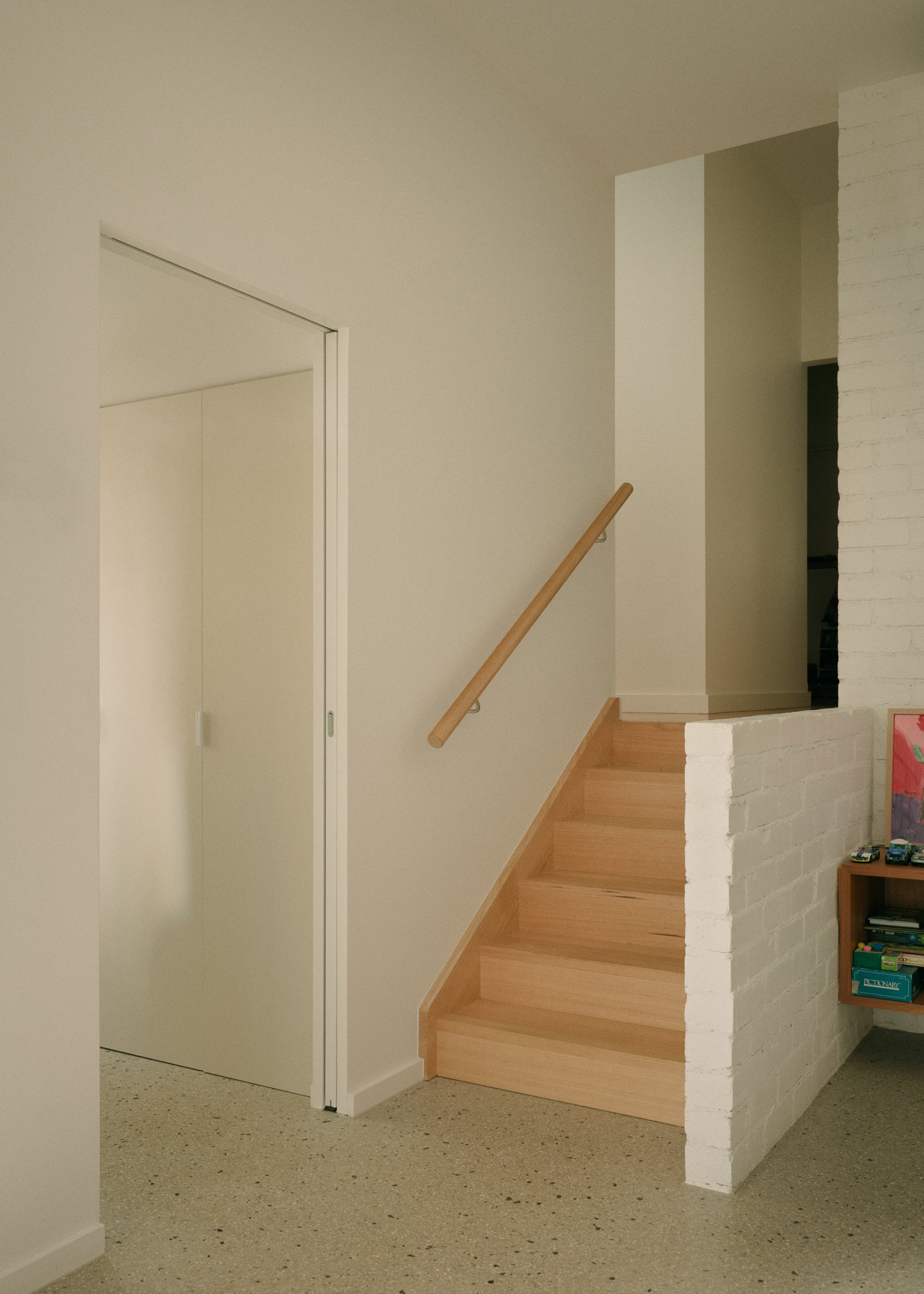
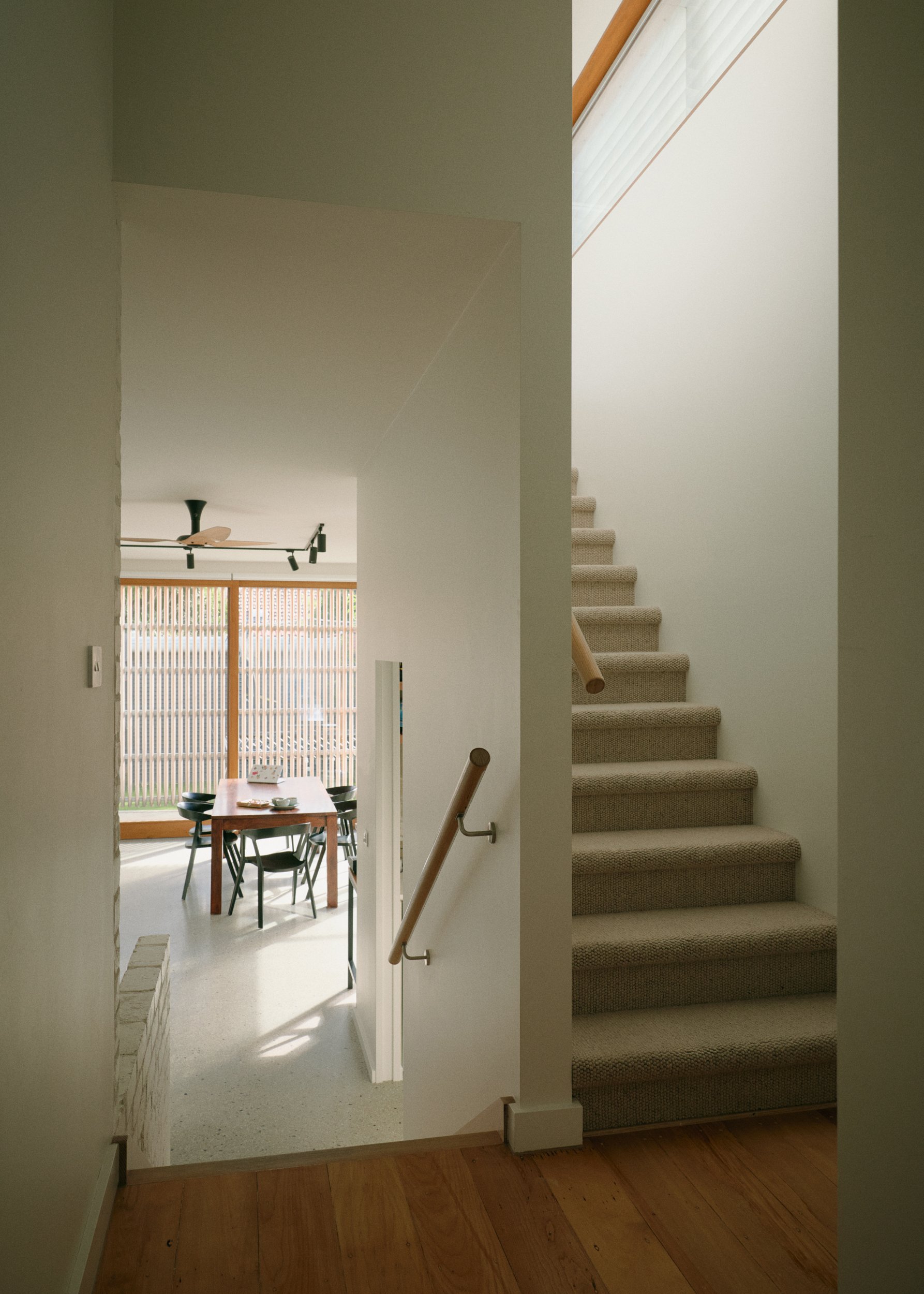
Left: The stairs connecting the existing house and the lowered new extension.
Right: A view down into the new extension as well as the staircase to the upper level .
The change in level helps define the organisation of the home, creating a clearer distinction between the more private spaces at the front and the shared living areas at the rear. Positioned at the lower level, the kitchen, dining and living spaces feel generous and open, with a direct connection to the garden.
The home is organised into a series of distinct yet connected zones. The original front rooms form a more private wing for the children. At the rear, the kitchen, dining and living areas open to the garden, forming the more social and outward-looking part of the home. Friends and family enter directly into this shared living area, strengthening the connection between the garden and the interior. Upstairs, the parents' bedroom, study and ensuite form a private retreat.
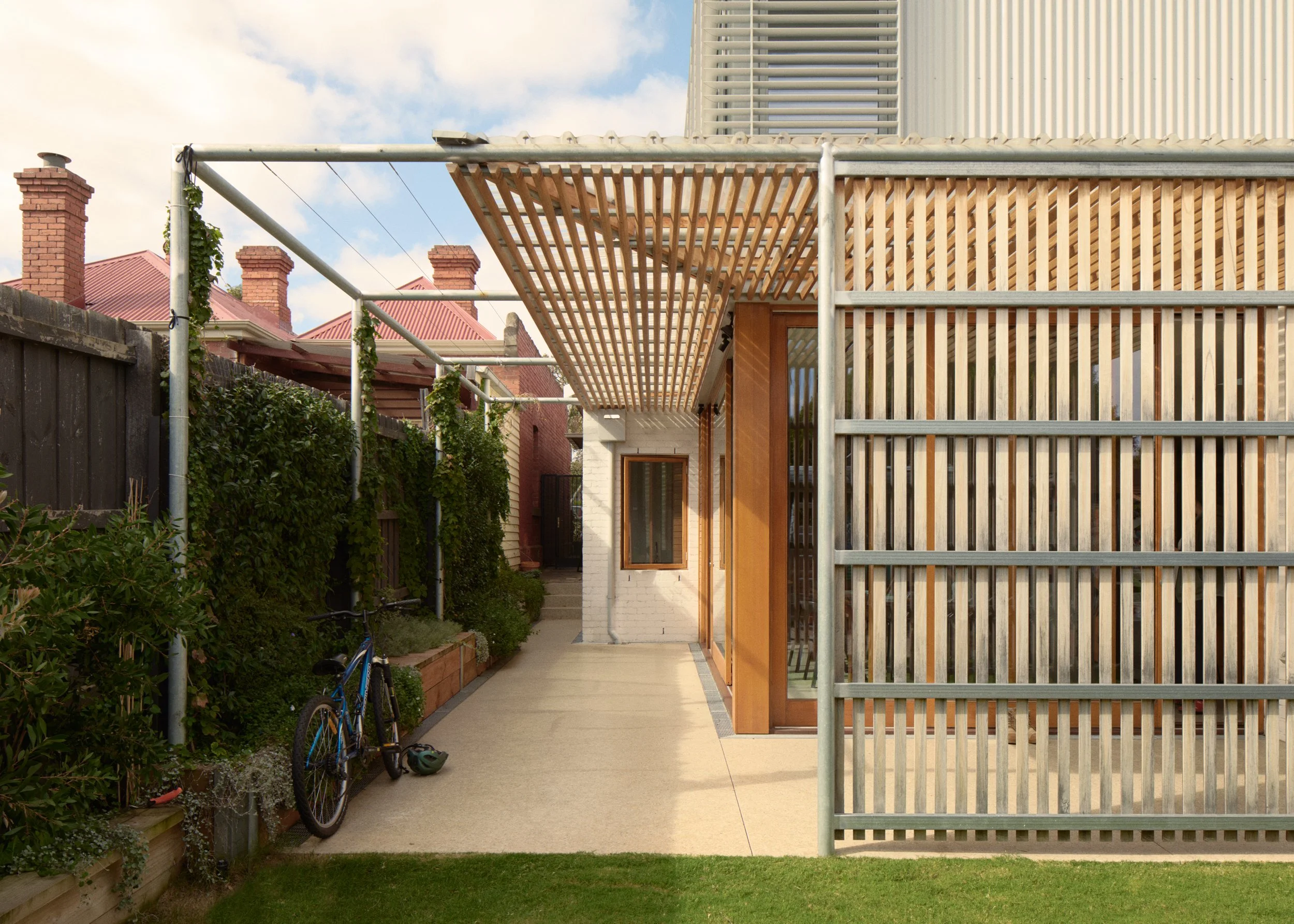
Friends and family can continue down the side of the house and access the open living spaces directly.